How many times have you imagined yourself cycling through a desert? The Jordanian desert, Wadi Rum, or perhaps an Andean desert like Atacama or Uyuni, or even the Taklamakan in the East?
In each of these environments, harsh to human life, people live—and it’s incredible, isn’t it? Yet women and men can adapt to almost any situation and difficulty, showing unexpected willpower, stoic resilience, and a daring courage worthy of a hero.
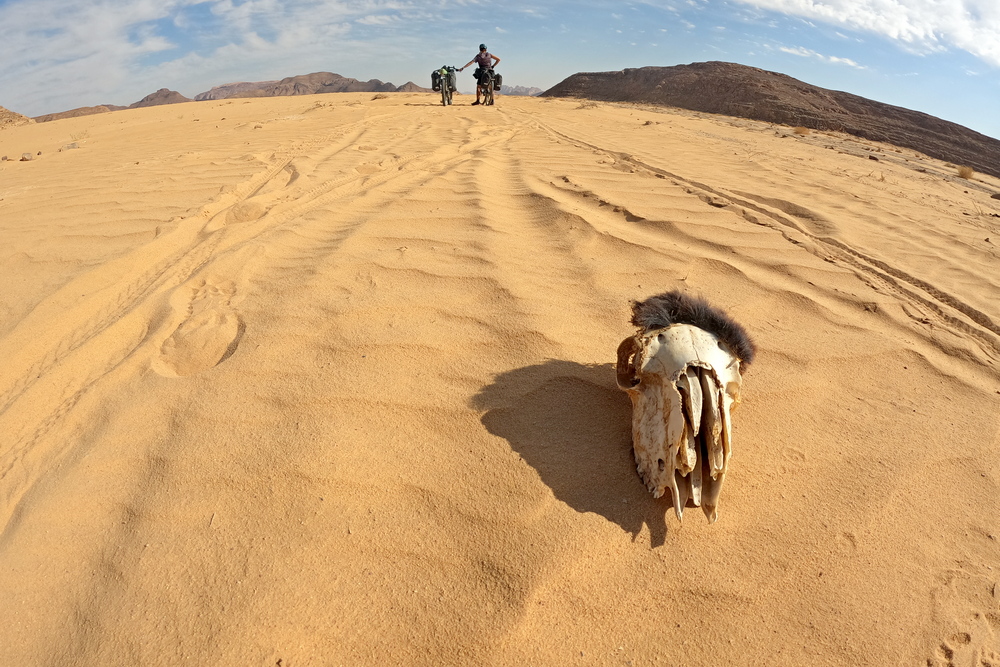
Cycling through the Jordanian Desert
A wise man once said that even the greatest and hardest journey begins with a single step. Every exploration—physical or inner—allows us to confront ourselves and others from the very first, essential step.
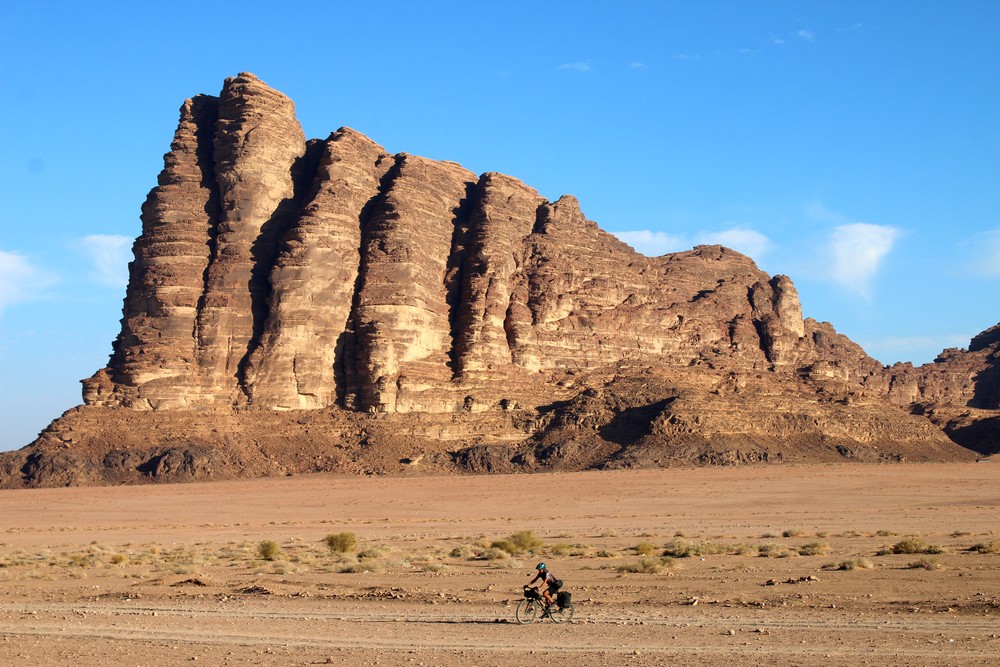
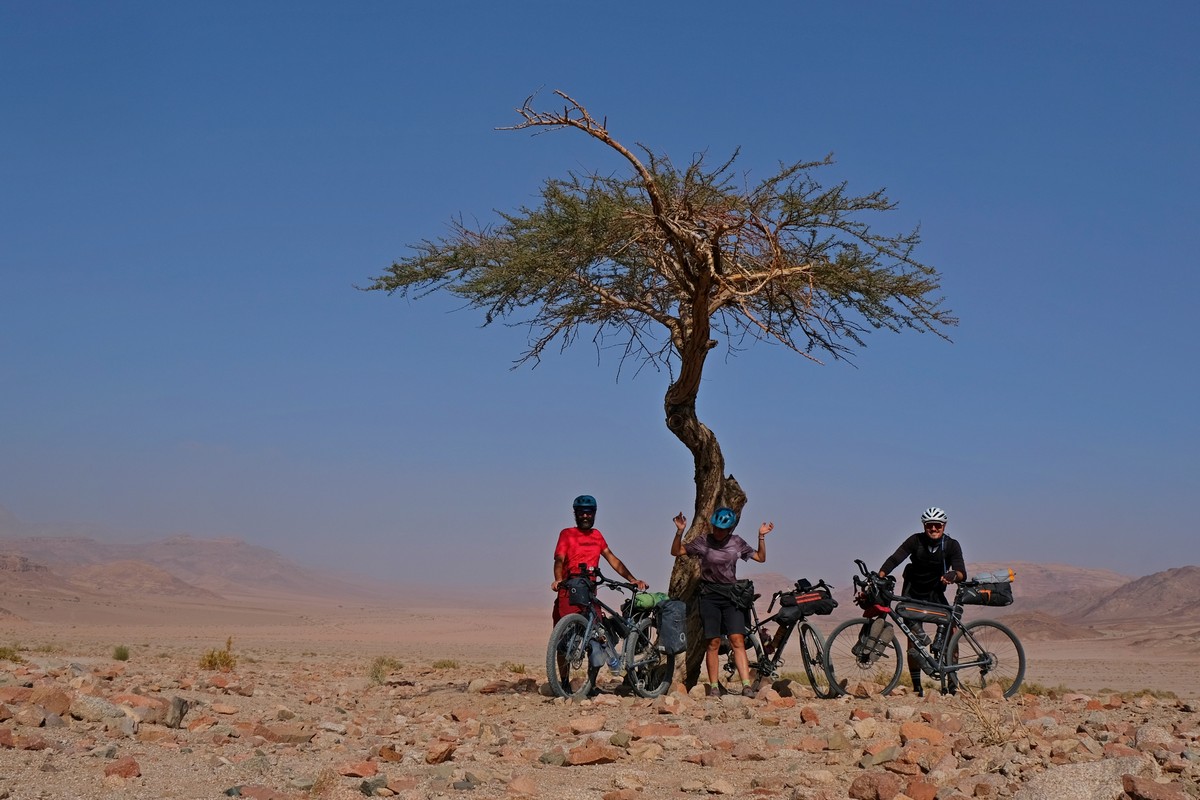
Every encounter, exchange, or confrontation allows us to question ourselves, to review our beliefs, to change them—and change ourselves. This is exactly what happened in Jordan, as we cycled into the Wadi Rum desert by bike, unaware of the fate and trails our journey wove for us. Furrowed tracks in the red sand, few landmarks, mirages, and exhaustion. The desert has no sense of humor—it never jokes; rather, it takes itself very seriously. It welcomed our curiosity only to grip our tires in an ever-tightening embrace.
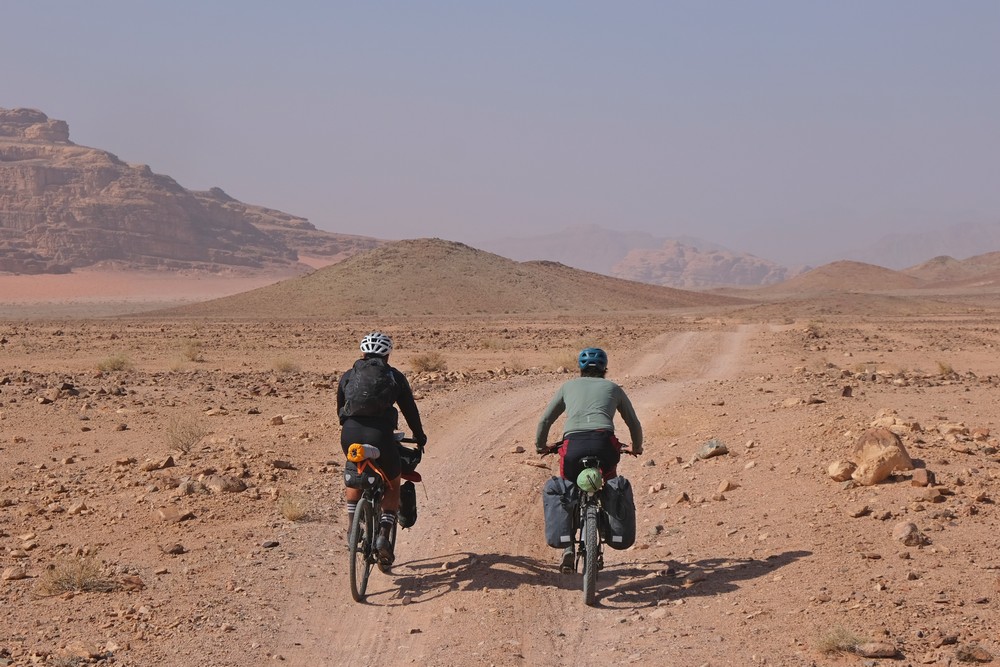
We push, we mount again, and then push even more. Our determination meets the Wadi Rum sky, which, for us, changes its attire, showing the desert’s other face: millions of stars glittering across the night sky in the cold.
The Guardians of the Jordanian Desert
For hundreds of years, the Bedouins have guarded the secrets of Wadi Rum’s vast stretches of sand and rocky mountains.
Only they knew about Petra—hidden and enchanting—and the exact location where it had been forgotten, when the Swiss explorer Johann Ludwig Burckhardt disguised himself as a pilgrim, a traveler heading to Aaron’s tomb, to witness the lost city with his own eyes.
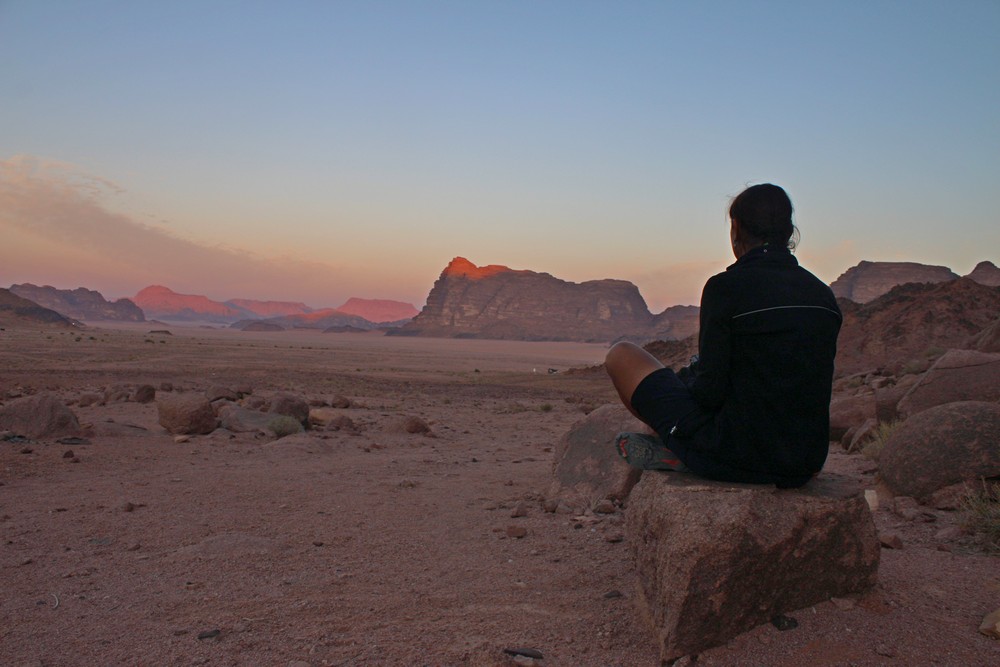
Only the Bedouins truly know the medicinal herbs growing on the edges of the arid land or in the oases, and they understand the clouds and winds that traverse Wadi Rum.
The Story of Ateeq and His Wadi Rum Desert
Ateeq is 51 years old, has seven children, and dozens of grandchildren.
For two generations, his family has guided travelers through the Jordanian desert, showing the warmer, welcoming sides of a place that seems barren and inhospitable, sometimes hard to interpret.
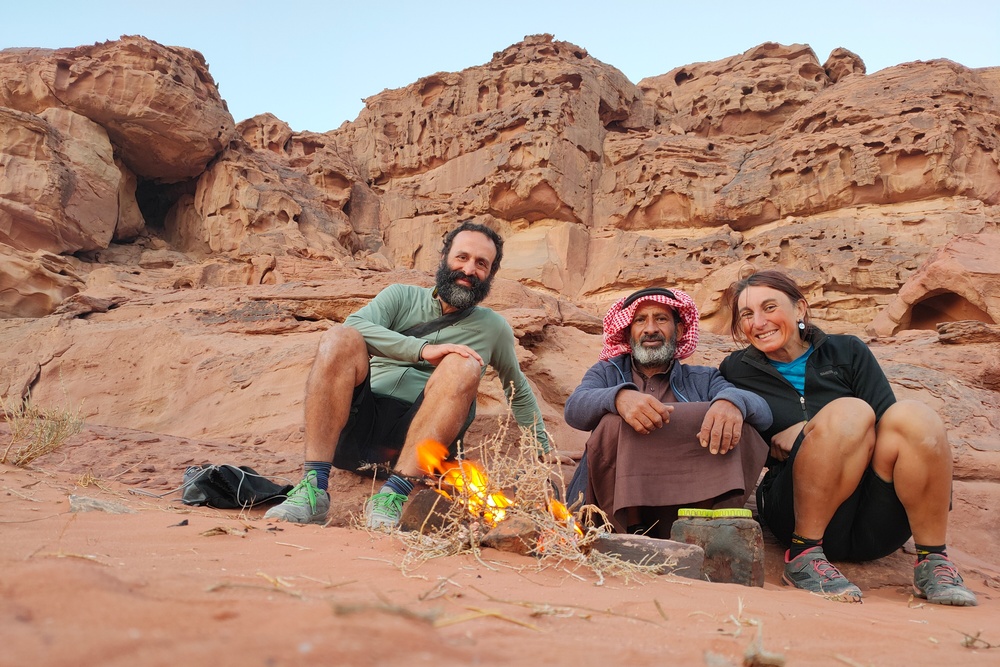
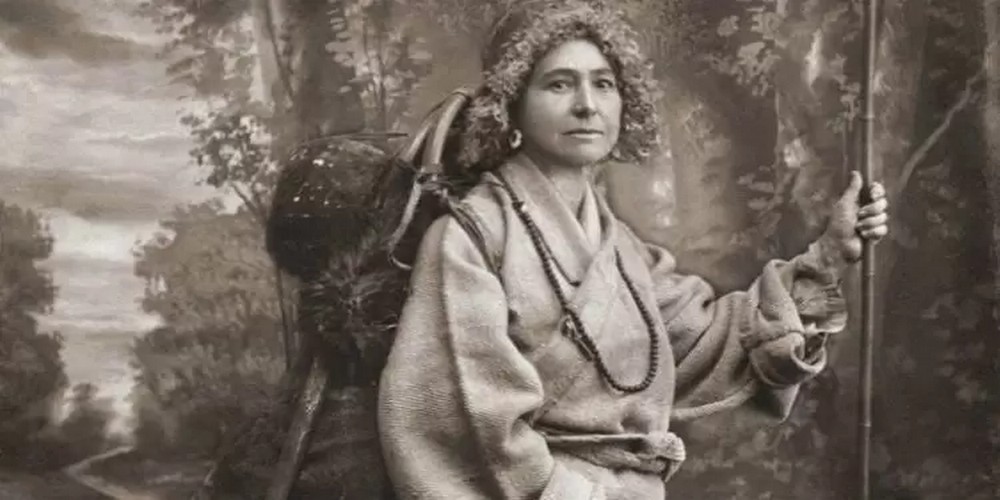
As a child, Ateeq experienced the nomadic life, moving from place to place in search of food for the sheep, camels, donkeys (used only for transport), dogs, and chickens. Bedouin women would sit outside, under the rare shade of an acacia or tamarisk tree, or beneath a fig tree in the oases that refresh the Moon Valley, spinning wool.
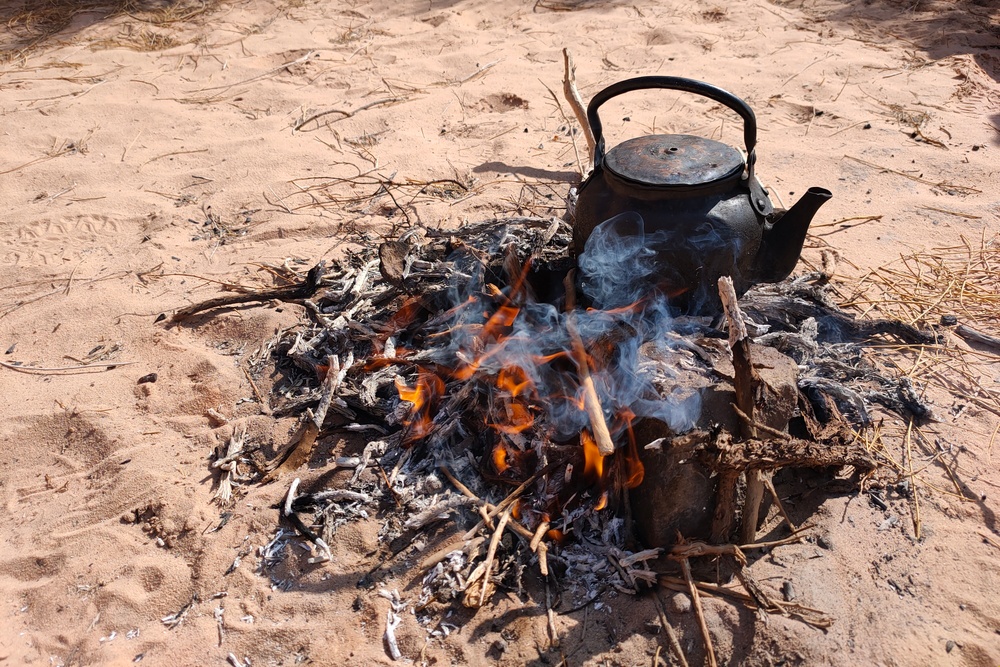
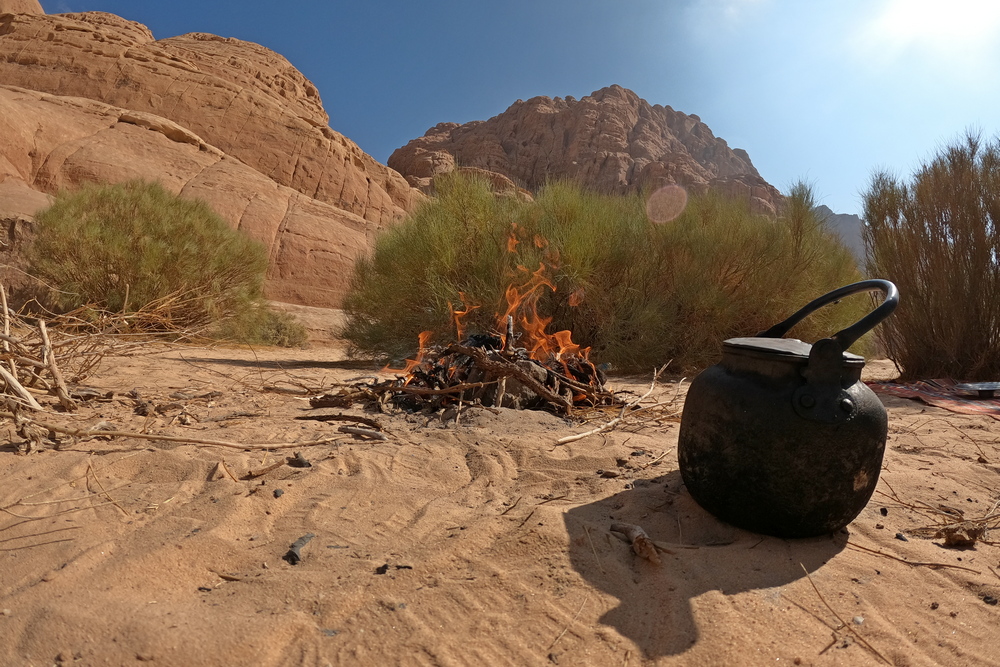
When the sun scorched the land at zenith, they rested in the deafening silence of the blazing plain, perhaps wondering how certain animals survived such impossible temperatures. Then, with mastery derived from long-passed knowledge and practice, they prepared tea in the desert and baked dough under embers until it rose perfectly.
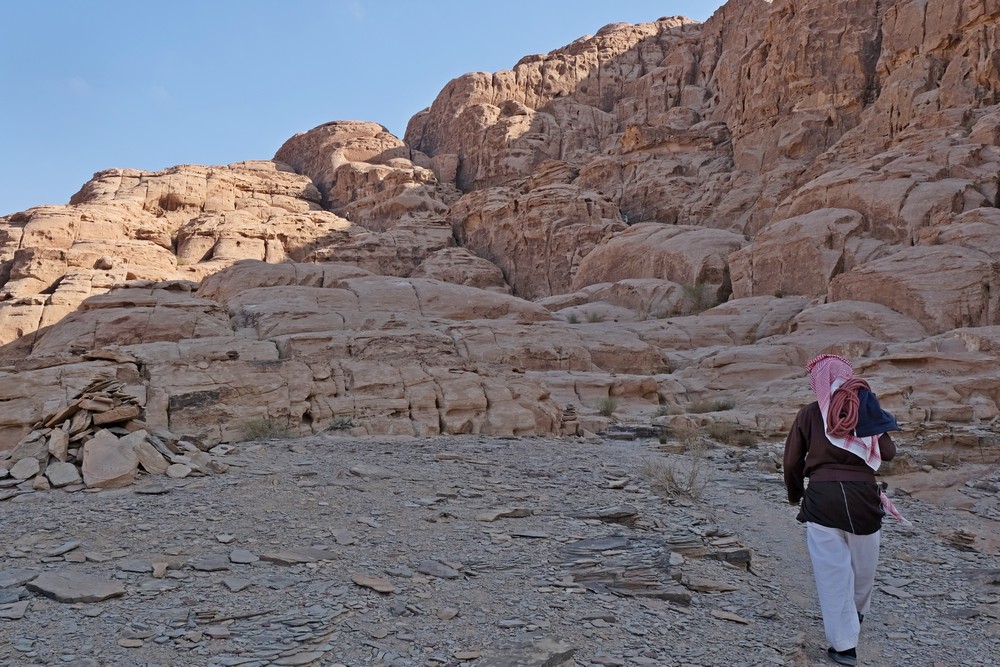
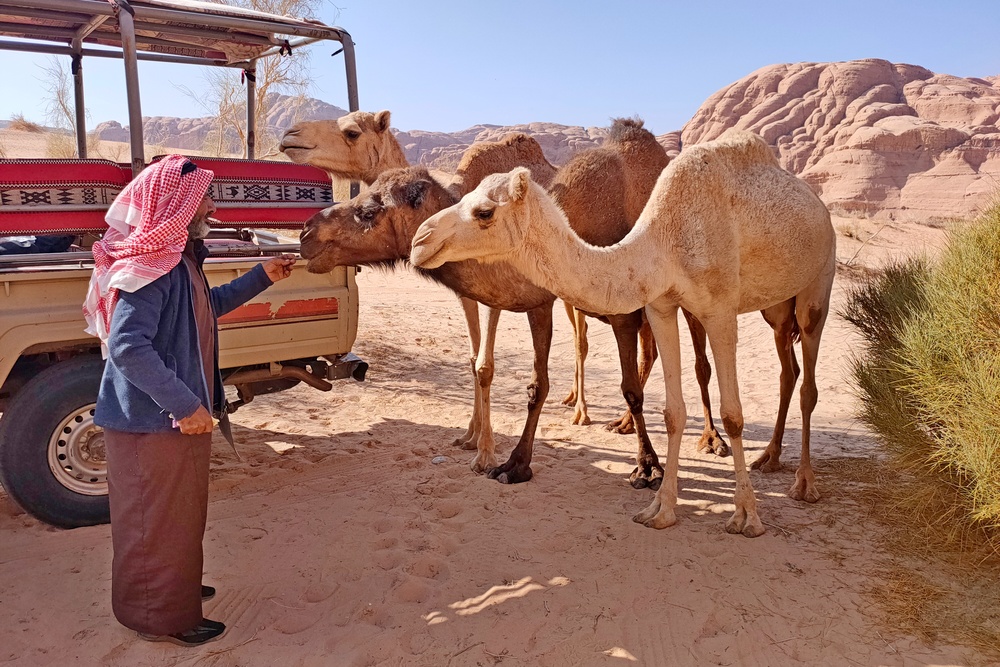
Today, Ateeq lives in the village of Rum like many other Bedouins and uses his SUV to show visitors his home and the desert surroundings. He climbs the mountains wearing a long brown robe and a red-and-white keffiyeh on his head.
The desert is within Ateeq, and Ateeq is part of the desert.
Lawrence of Arabia on Mount Rum
Lost in the vast expanse stretching beyond the horizon, we barely notice the rocky outcrop rising into the turbulent blue sky. Turbulent because the morning haze from the heat blurs the view, creating distorted visions. But back to the rock: Mount Rum, 1,734 meters high, serves as a landmark for desert nomads, whether Bedouins or travelers.
Thomas Edward Lawrence, known as Lawrence of Arabia, wrote his Seven Pillars of Wisdom, mentioning this mountain, which dominates the Wadi and its magnificent creatures: Blanford’s foxes, gray wolves, sand cats, and ibexes.
Tea Time in the Desert
With keen eyes scanning every detail among the mountains, while the dark soot-covered teapot sits on a small fire in the sand, Ateeq narrates.
He recalls how, in the past, instead of socializing through a smartphone, people observed the animals in their nooks, studied the stars, and daily marveled at the horizons while discussing Life.
In Wadi Rum, if something happened, everyone noticed—and no one needed social media to feel part of a community.
Meanwhile, the tea is almost ready: Ateeq adds sage and cardamom dried under the Wadi Rum sun and the dark leaves of the plant native to China. After a few minutes, he carefully pours the filtered tea into glass cups.
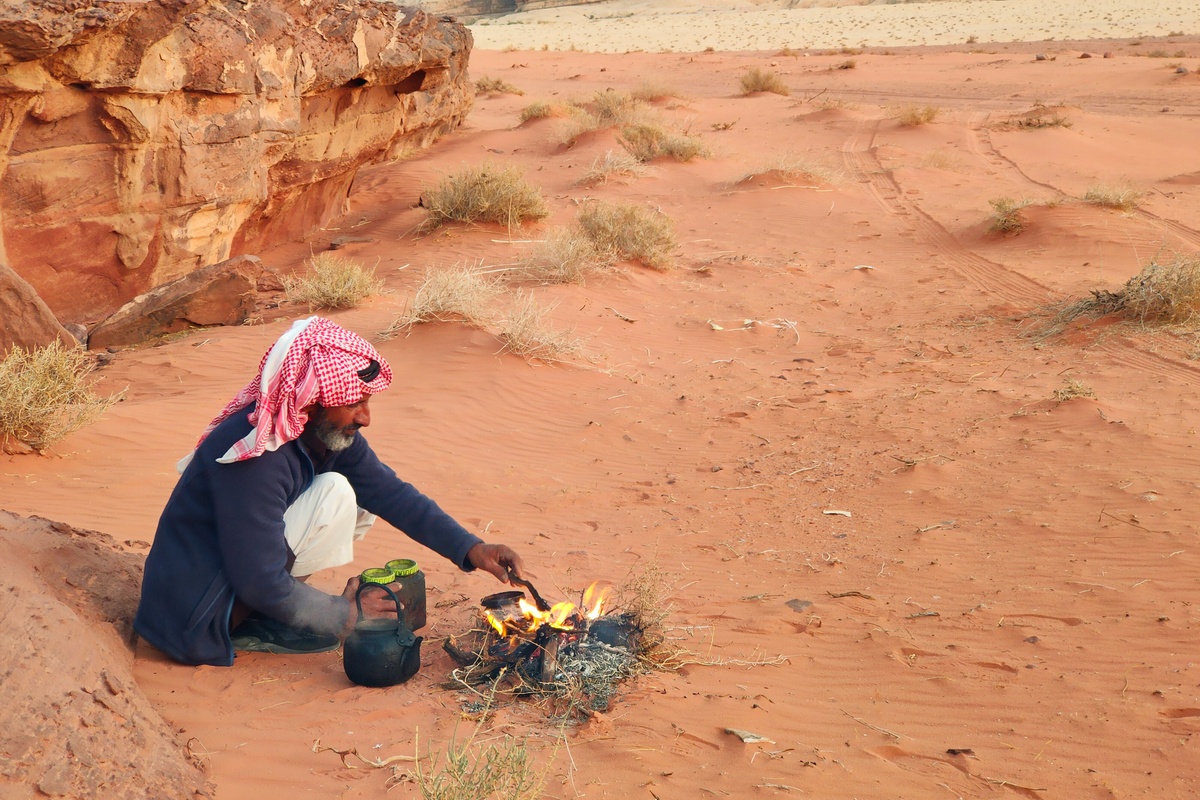
He sips slowly to avoid burning himself, smiling at a past that now seems very distant: he does not miss the nomadic life at all.
When he wants solitude in the desert, he loads the large Bedouin tent onto his jeep and retreats to his favorite spots for contemplation. Then—laughing—he is happy to return home for a shower!
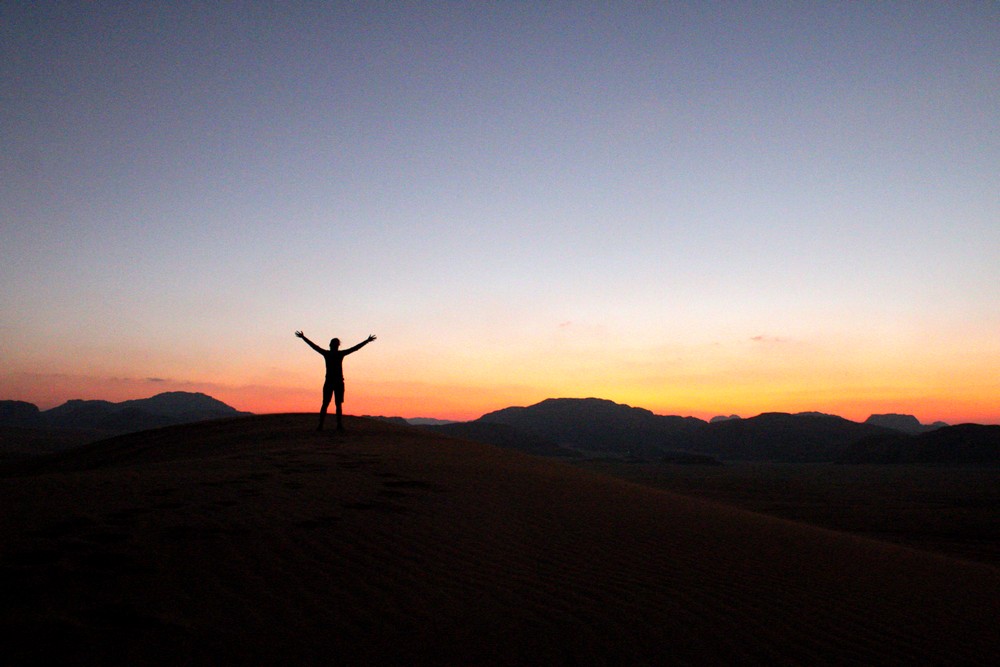
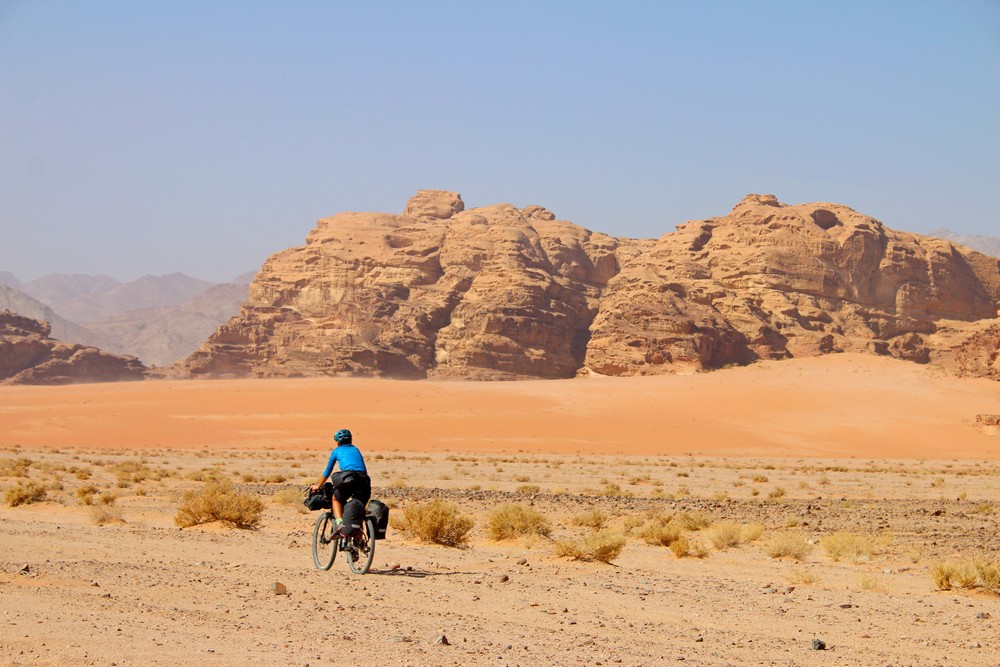
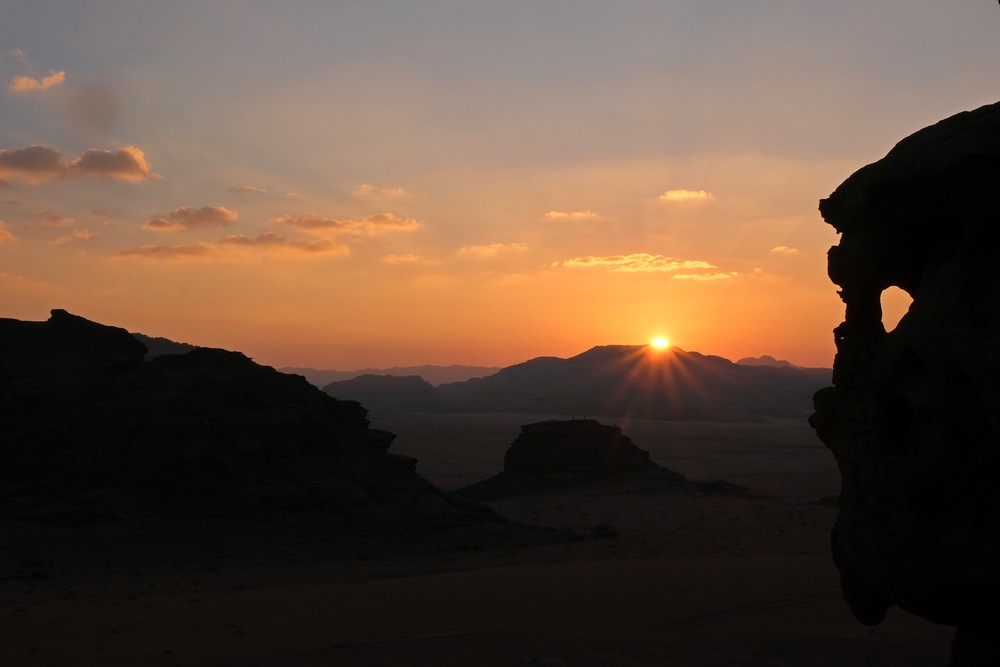
The sun begins to hide behind one of the rare rises in jordanian desert of Wadi Rum. The ether glows, and the warm golden hour light envelops us completely, softening all our thoughts.
His eyes sparkle once again as he admits that the elders can still, by observing the sky and smelling the air, predict the four rare rainy days of the year in the desert.