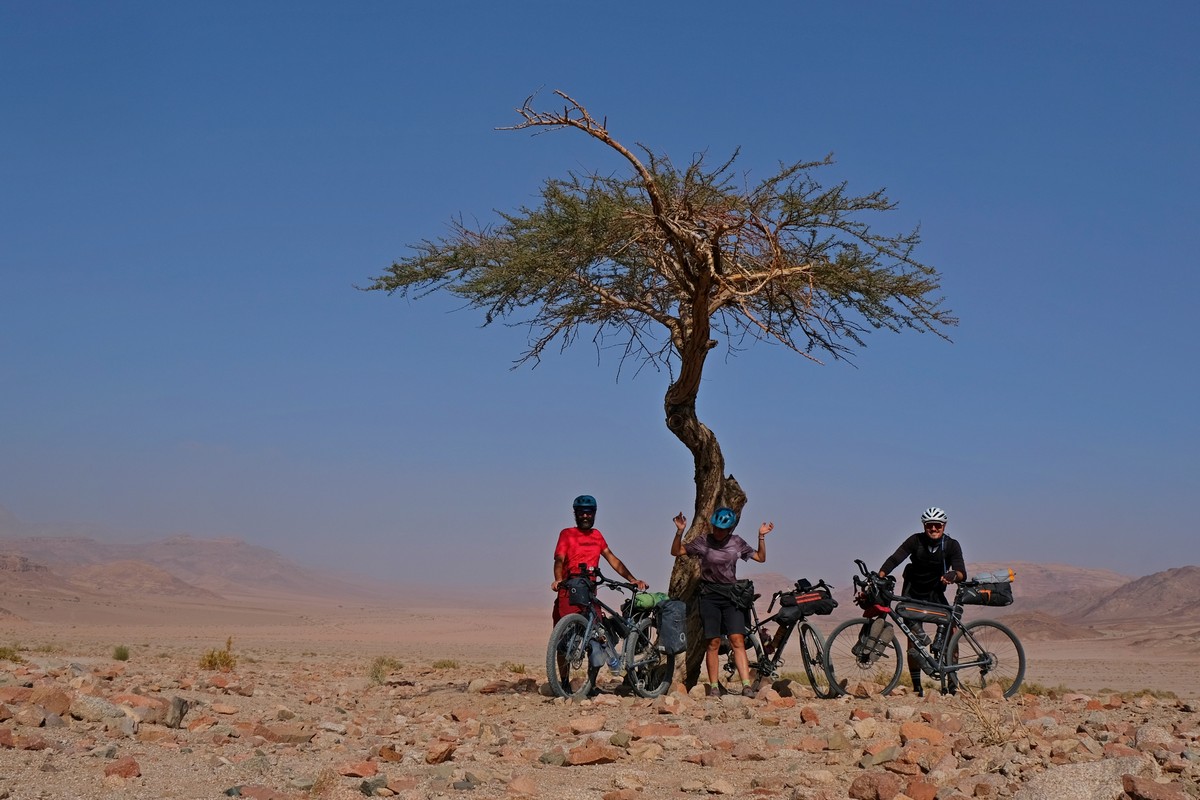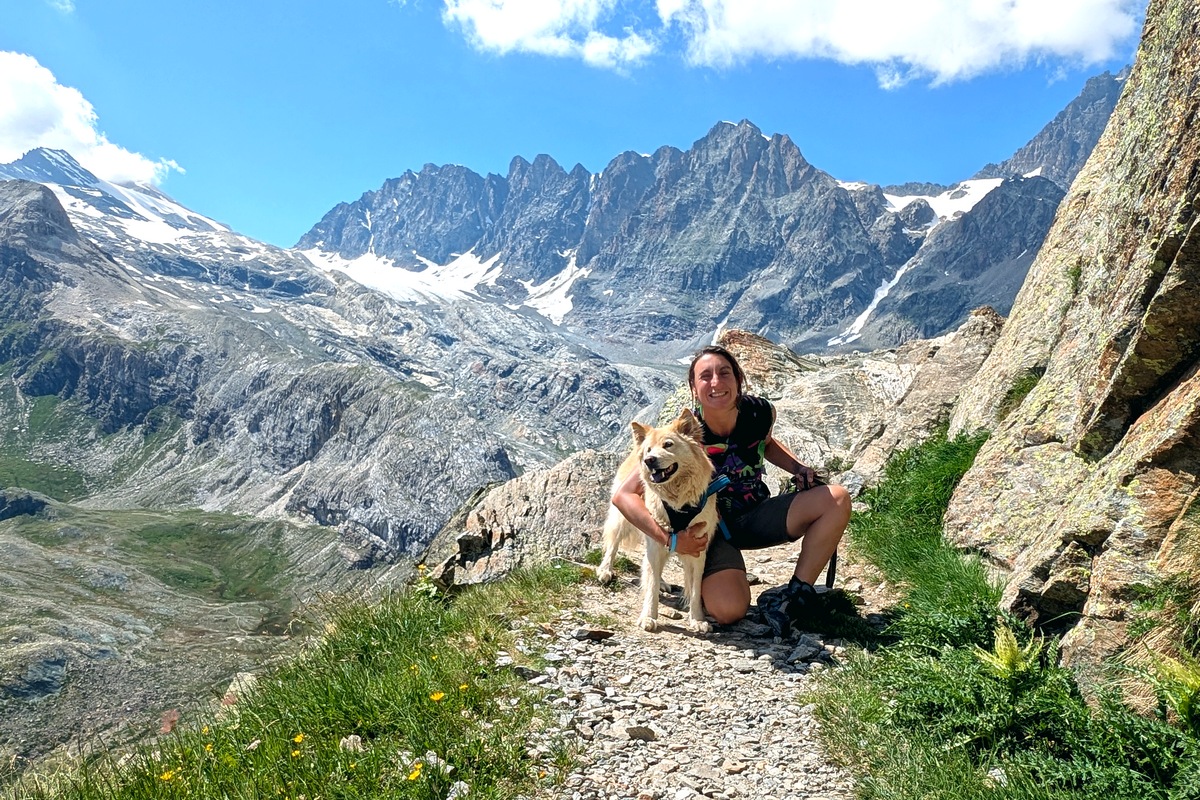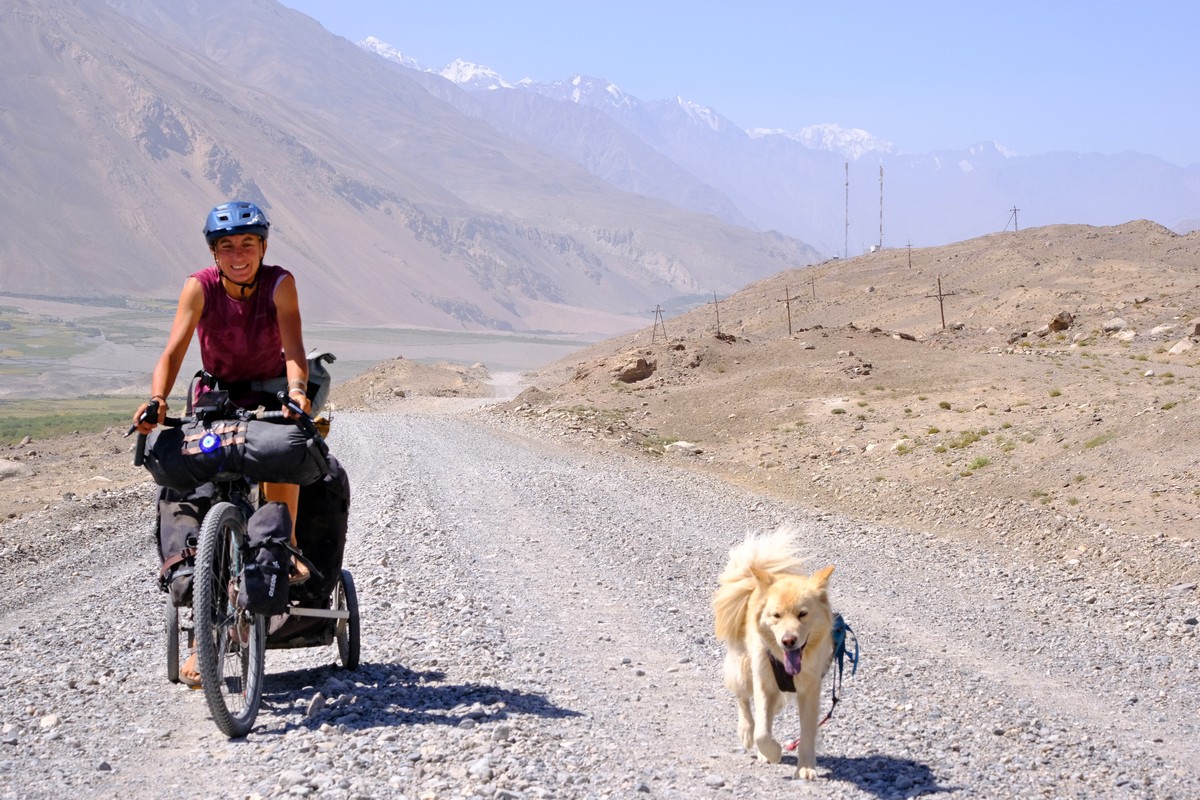
There is a thin, dusty ribbon of land — a remote sliver of Earth carved over centuries by the slow, patient work of the Panj River, guarded by sheer stone walls rising like ancient fortresses from the valley floor. The Wakhan Corridor is a legendary stretch of land tracing, for miles, the fragile border between Tajikistan and Afghanistan.
Only scattered villages and small patches of cultivated land cling to the relentless flow of the river, marking the line between the Tajik and Afghan Pamir — across the water, under Taliban control.
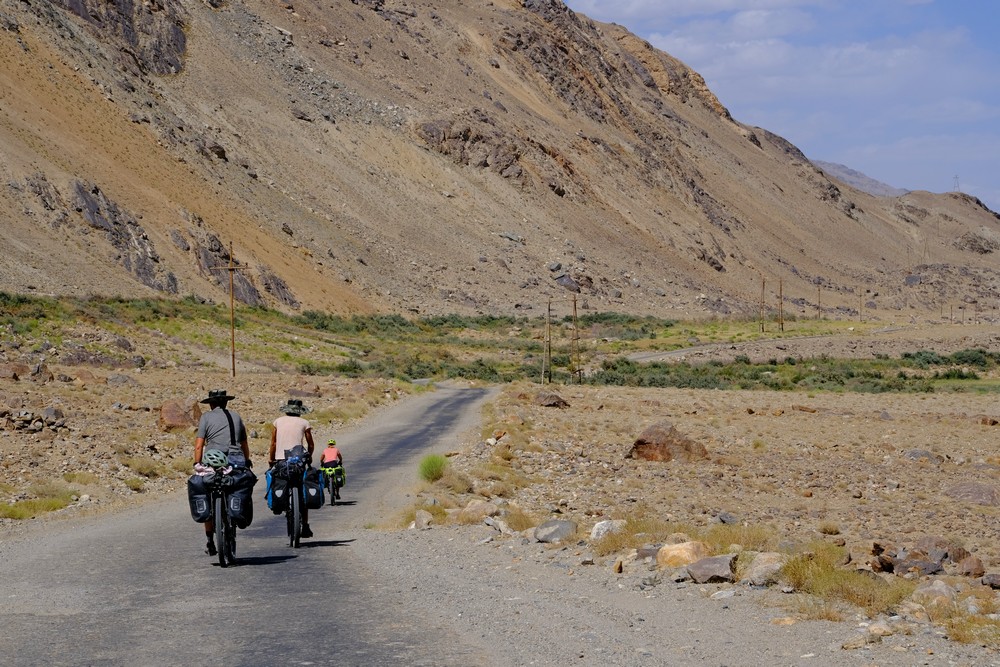
From Khorog, the road divides. One branch climbs east, cutting through the mountains as the famous Pamir Highway, while the other follows the frothing water southward into the heart of the Wakhan Corridor.
Into the Heart of the Wakhan
The Panj, indifferent to our presence, meets the Gunt River near Khorog, swelling with pride and volume. Meanwhile, alongside the Vakhsh, it forms one of the two headwaters of the mighty Amu Darya, a river stretching over 2,650 km across Central Asia.
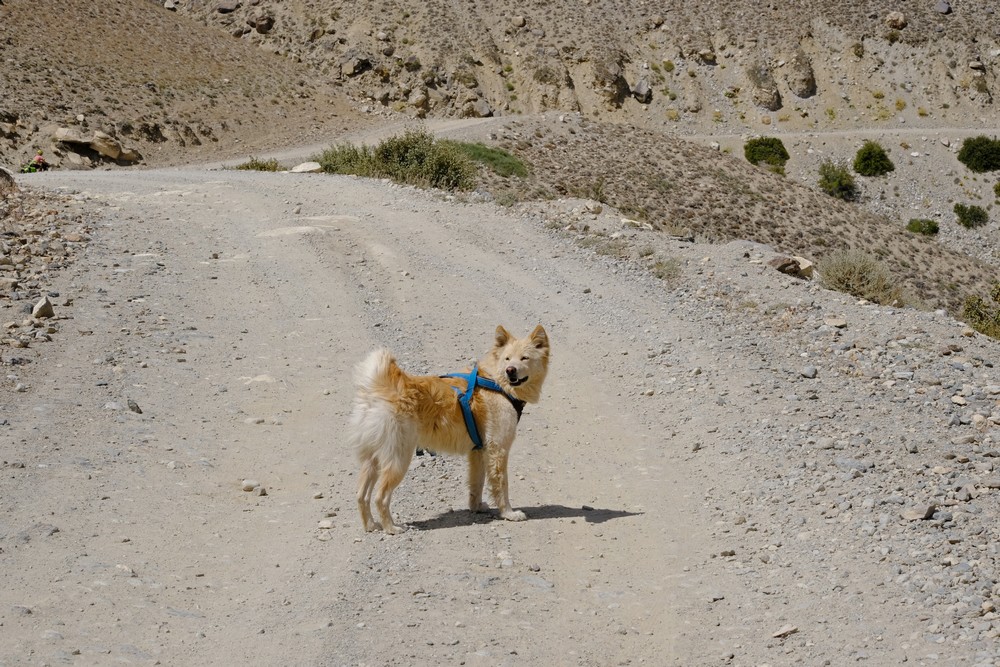
Wild and restless, the Panj races against us. We, tiny bicycle travelers between the towering pillars of the Earth, feel humbled before the power of its current. Water is life, yet here it is also border and destruction — landslides and floods occasionally carving away the fragile earth.
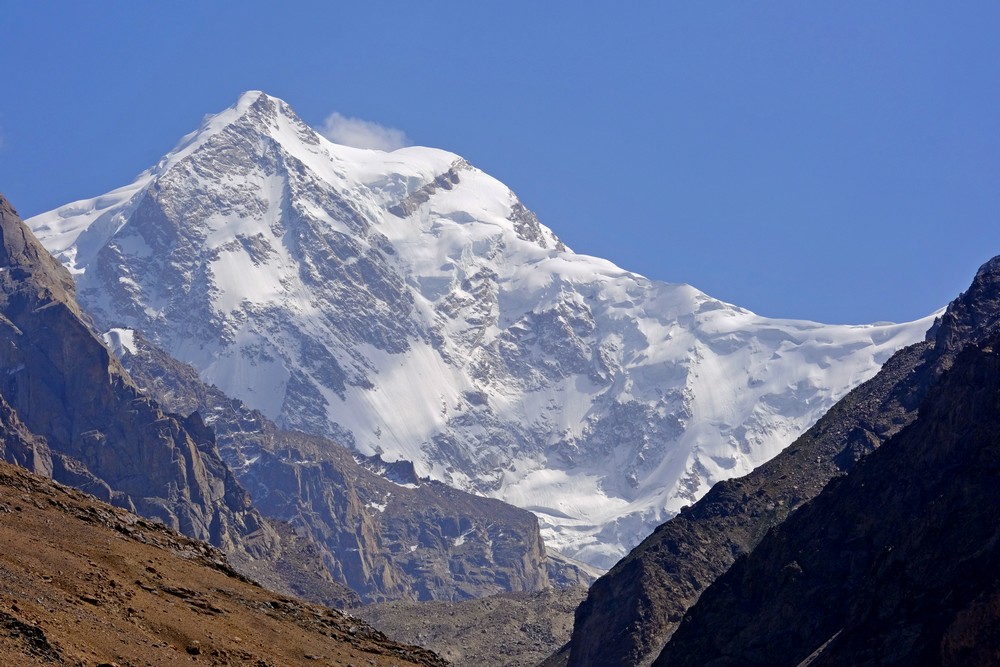
South of Khorog, the asphalt disappears sooner than expected, leaving us at the mercy of sand, dust, and hard-packed dirt. The Pamiri villages are few and scattered — the space between rock and river is barely enough for life to cling.
In one of these settlements, a dark-haired girl plays with her friends. Antonio joins a game of football, and excitement spreads instantly through the group.
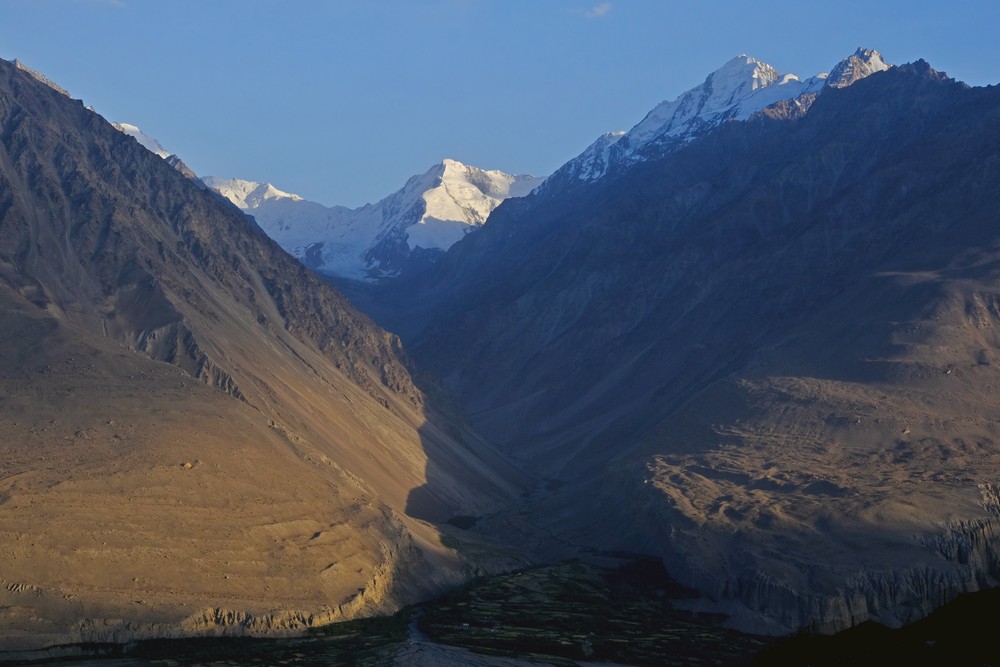
Meeting Nuca’s Family
Nuca’s family occasionally hosts travelers, offering tea, homemade jams, fruit, and small pastries. Meanwhile, across the river, bulldozers rumble — the Taliban government is fortifying the Afghan bank.
Nuca, dressed in a yellow sweatshirt, smiles curiously and follows us everywhere. Even at dinner, she is the perfect host, her laughter becoming a natural bridge between us and her family.
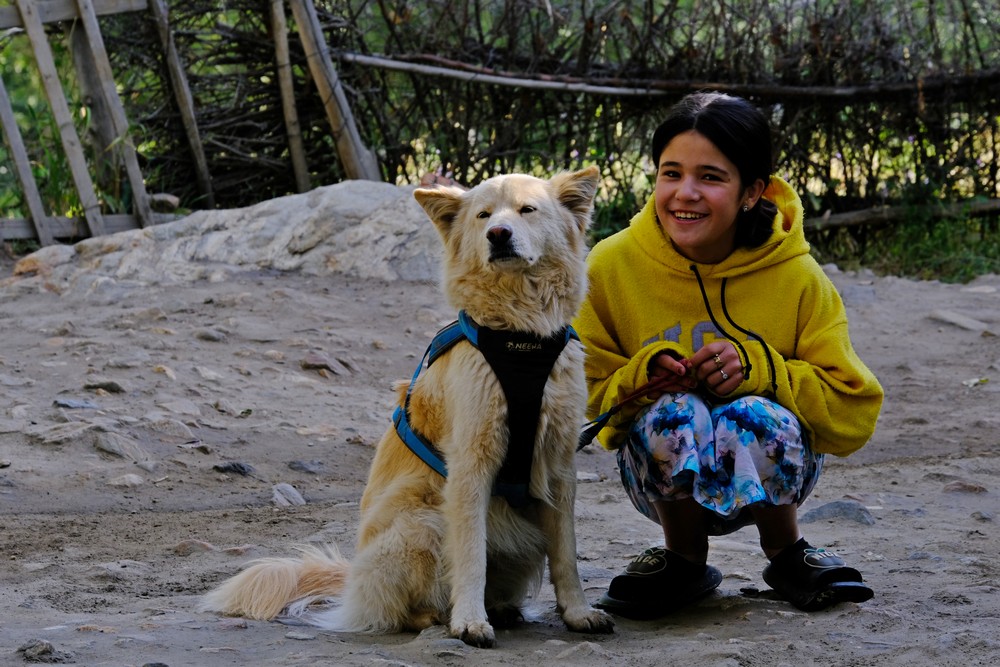
Inside their home live her grandparents — the grandfather entranced by the TV, the grandmother working miracles in the kitchen — and her mother, tirelessly tending to the household.
After dinner, before we curl up on our mats and in our warm sleeping bags, begins the slow walk to the “bathroom”: a wooden shed built around a pungent hole in the earth. A few steps away, the “sink” — a cold mountain stream flowing toward the Panj.
In the crisp night air of the Wakhan, a faint melody seems to echo from afar, an ancient song. In my head, it’s Play with Fire by the Rolling Stones.
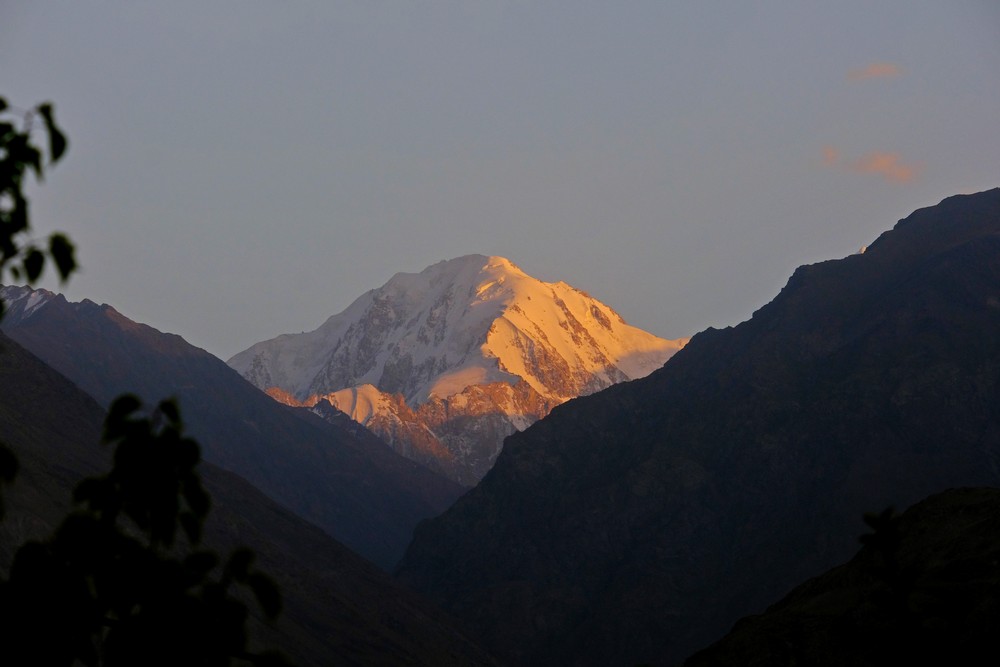
The Afghan Market of Ishkashim
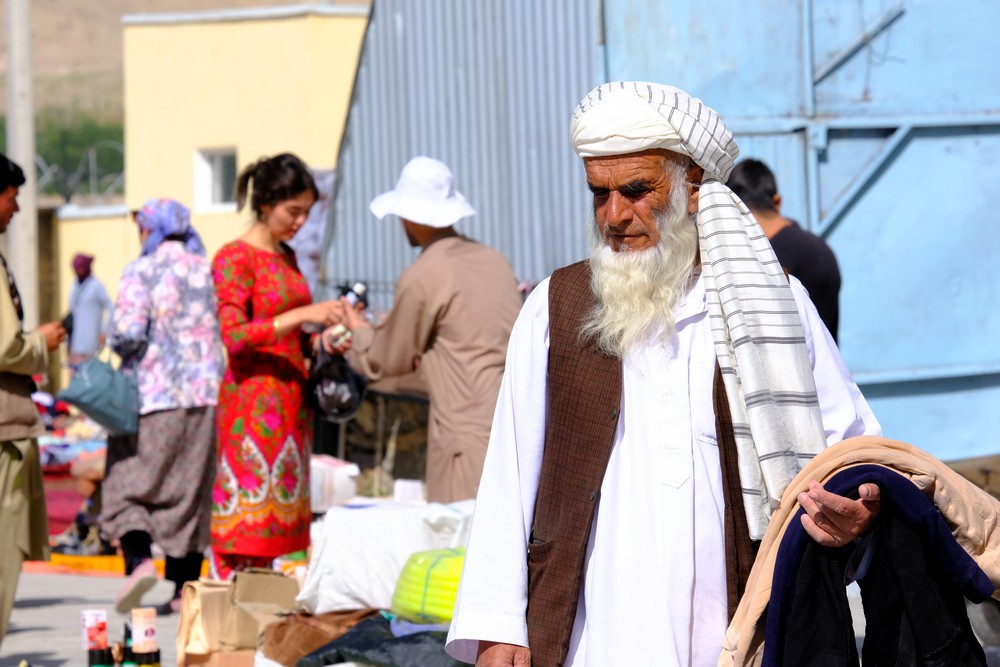
Hands reach out — some friendly, some indifferent. Air is filled with scents both delicate and bold. The Saturday Afghan market in Ishkashim is a living mosaic of colors, faces, and dialects.
The aroma of grilled lamb mixes with voices in Tajik, Dari, English, and local Pamiri languages.
One thing stands out — the absence of Afghan women.
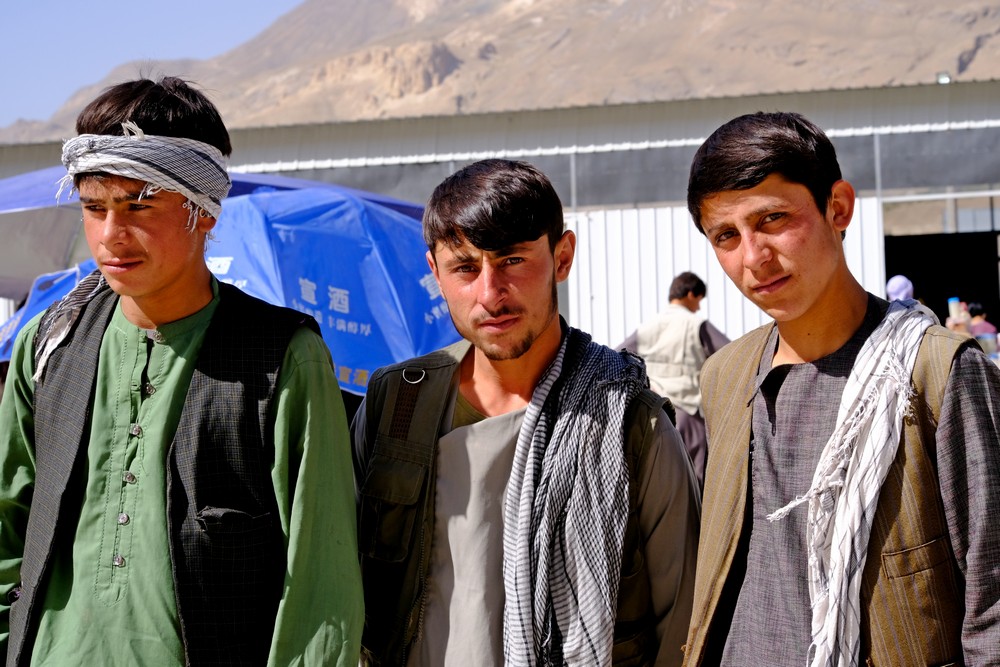
Even so, the market feels warm and human. Vendors smile, trading small goods and bright fabrics. I buy a strange black paste said to cure pain, a bracelet as blue as the ocean, and a woolen scarf for the cold evenings.
Among the visitors, one man approaches Renata and me as we take pictures. He turns out to be Giancarlo Corbellini, a geographer who, in the 1980s, climbed the Hindu Kush with Reinhold Messner. The world truly is small.
Hope glimmers in the eyes of young Afghan vendors: may they one day be part of a peaceful revolution guiding their people toward social change.
The Fortress of Yamchun
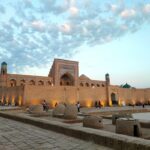
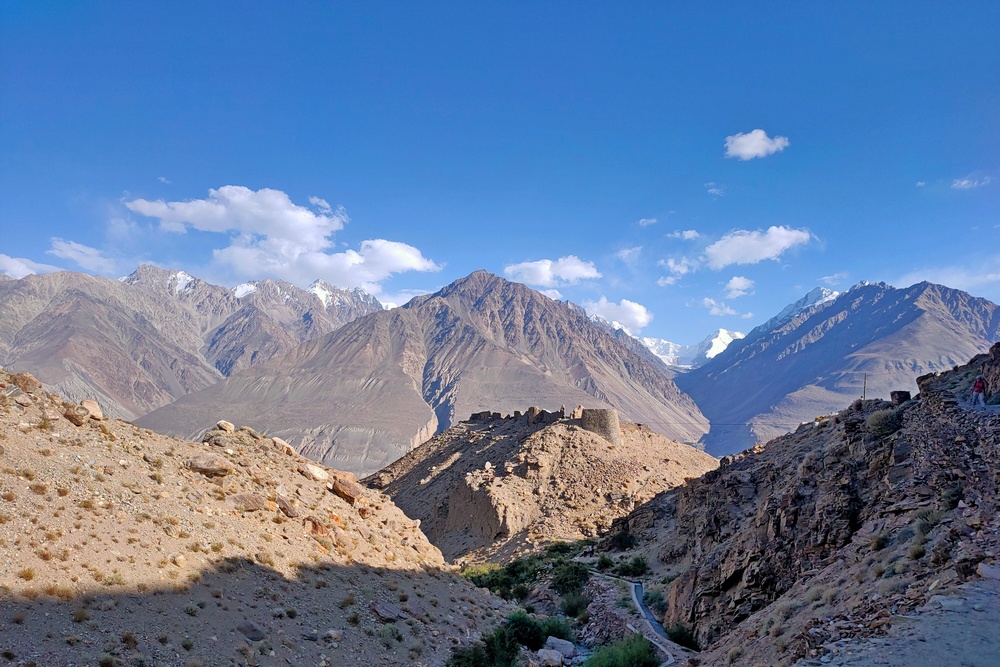
Long ago, Yamchun Fortress guarded trade along this branch of the Silk Road. Built in the 3rd century BCE, it was known as Zamr-i-Atash-Parast, — “Fortress of the Fire Worshippers,” a relic of the Zoroastrian faith that once flowed from Persia into the valleys of Tajikistan.
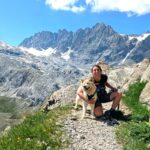
Perched above the Wakhan Corridor, Yamchun still looks out over time itself. Beyond it, the snowy peaks of the Hindu Kush rise nearly 7,000 meters high.
Nearby, at Bibi Fatima Hot Springs, natural pools bubble with geothermal warmth — a welcome gift in this cold, high desert.
Shakar, Keeper of the Hunting Lodge
Shakar’s curious gaze moves from our bikes to the small trailer, wondering what kind of strange travelers arrive here with a dog.
His summer home stands beside the new hunting lodge, about 850 meters from the dusty road. Each year, hunters pay thousands of euros to shoot one of the majestic Marco Polo sheep that roam the inaccessible Pamir slopes.
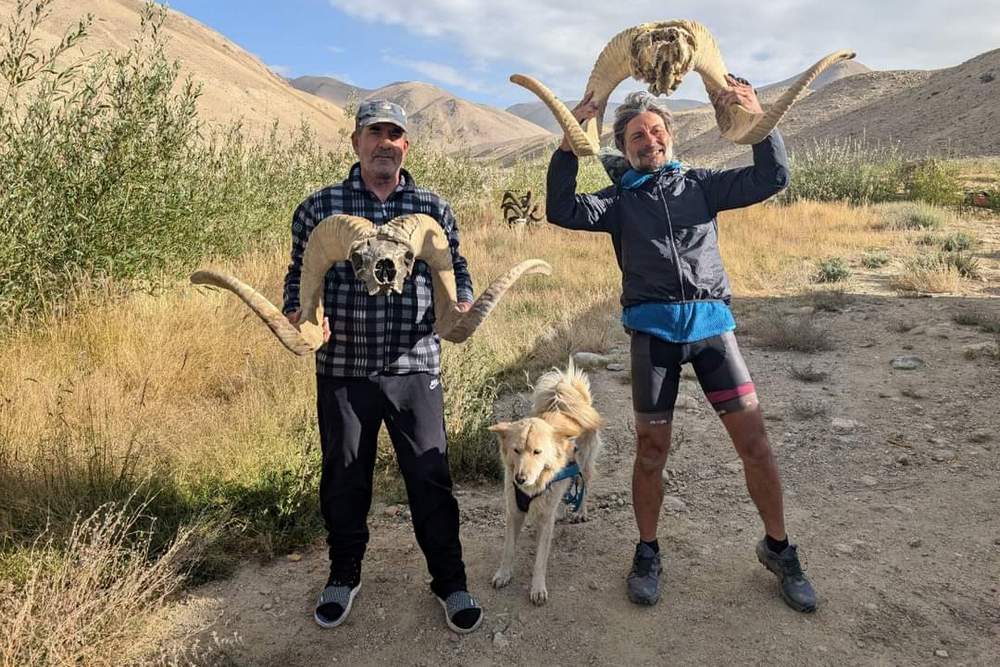
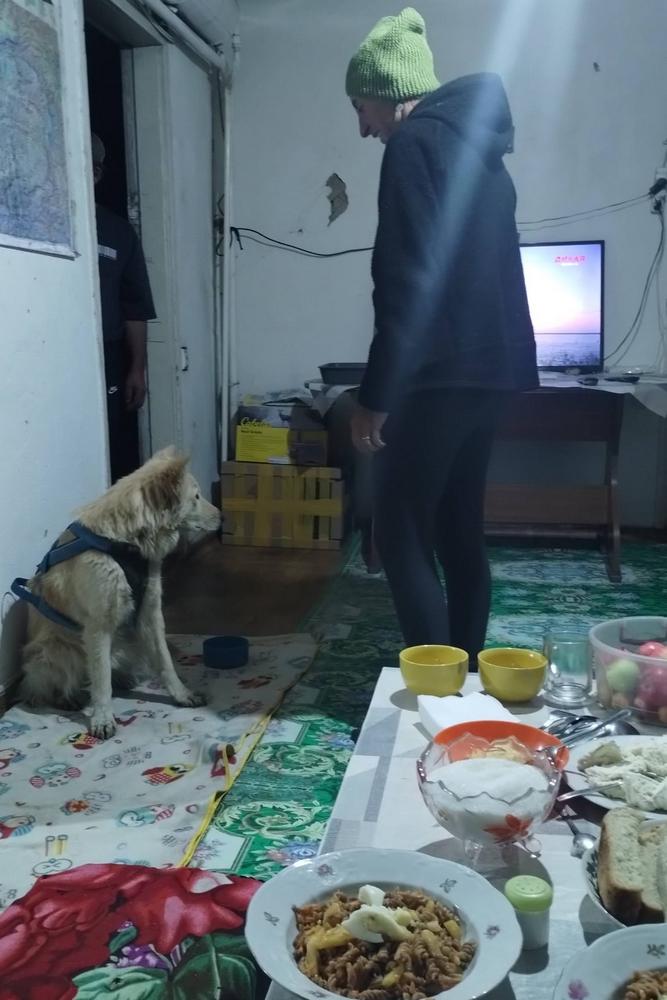
That night, two Russian hunters are expected. Shakar, a Pamiri from Alichur, welcomes us anyway. He cooks a delicious lagman dinner and lights a small stove.
Soon, the room grows warm — the perfect mountain sauna after a freezing day. We mix hot and cold water to wash, feeling reborn with every ladleful.
As we eat, Shakar tells us, “Bring Nala inside. Wolves roam at night.” His kindness touches us deeply.
There is no cake for my birthday, but Shakar gives me handmade Pamiri socks. The gift fills me with gratitude.
Tomorrow, we’ll enter the Zorkul Lake Special Zone, once again following the shifting line between Tajik and Afghan lands.
What is the Wakhan Corridor?
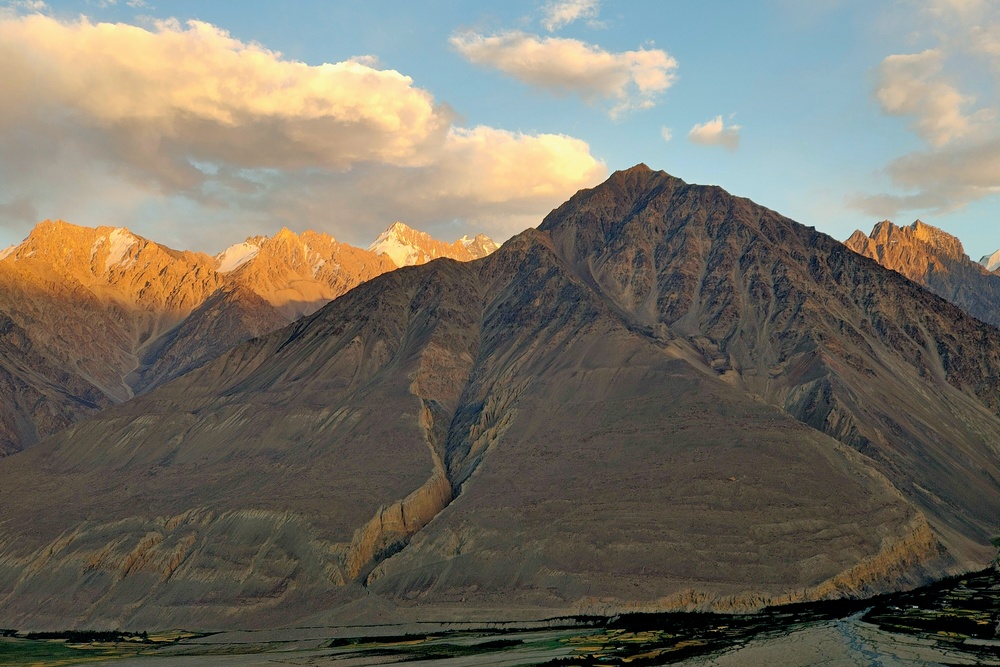
The Wakhan Corridor is a narrow strip of land connecting Afghanistan to China, flanked by the Pamir and Hindu Kush mountain ranges. Cycling through it means venturing into one of the world’s most remote and untouched regions, where Central and South Asia meet along the ancient Silk Road.
Pamir Travel Documents
If you are planning a cycling or trekking adventure in the Pamir, it’s essential to have all the necessary documents to enter Tajikistan and the autonomous Gorno-Badakhshan (GBAO) region. Here is a practical checklist:
- Valid Passport – Must have at least 6 months of validity remaining at the time of entry into Tajikistan.
- Tajikistan Visa – Required for most travelers. Can be applied online via e-visa or at Tajik embassies. Serves as the general entry permit for the country.
- OVIR / Local Registration – The OVIR registration is required if you entered overland without an e‑visa and must be completed within 10 days of arrival in the country. This notifies the government of your presence and may be requested at GBAO checkpoints.
- GBAO Permit (Gorno-Badakhshan Permit) – Required to enter the autonomous Pamir region. Can be obtained online before departure or via local agencies in Dushanbe or Khorog. Serves as official authorization to travel in remote and controlled areas.
Tip: Always carry both digital and paper copies of your documents, as internet connections in parts of the Pamir are limited, and checkpoints can be isolated.