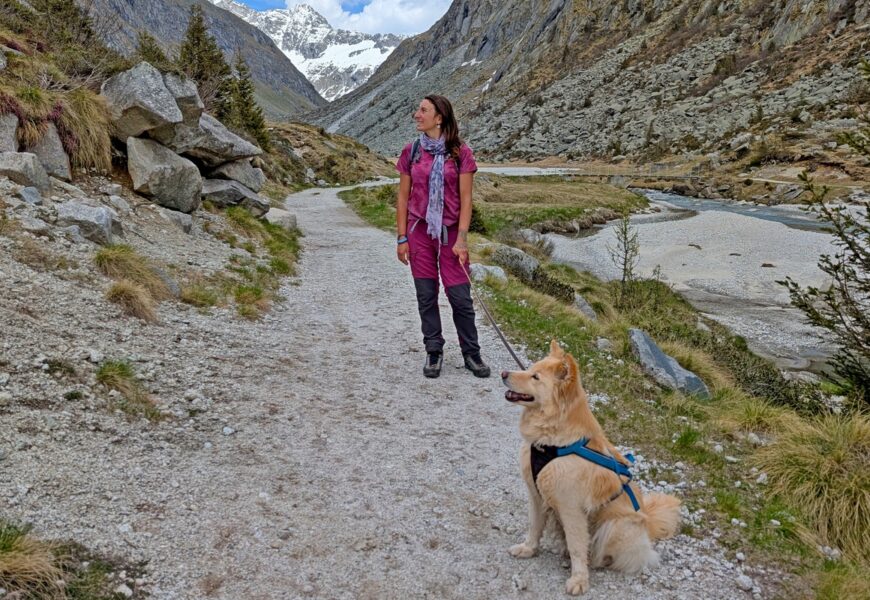
Sharing a hiking experience with your dog is something deeply wonderful.
Dogs are extraordinary companions, able to adapt to our pace and needs with disarming ease.
But we also have a responsibility: learning to truly know them, respecting their physical and emotional limits, and shaping our adventures around the one who walks beside us.
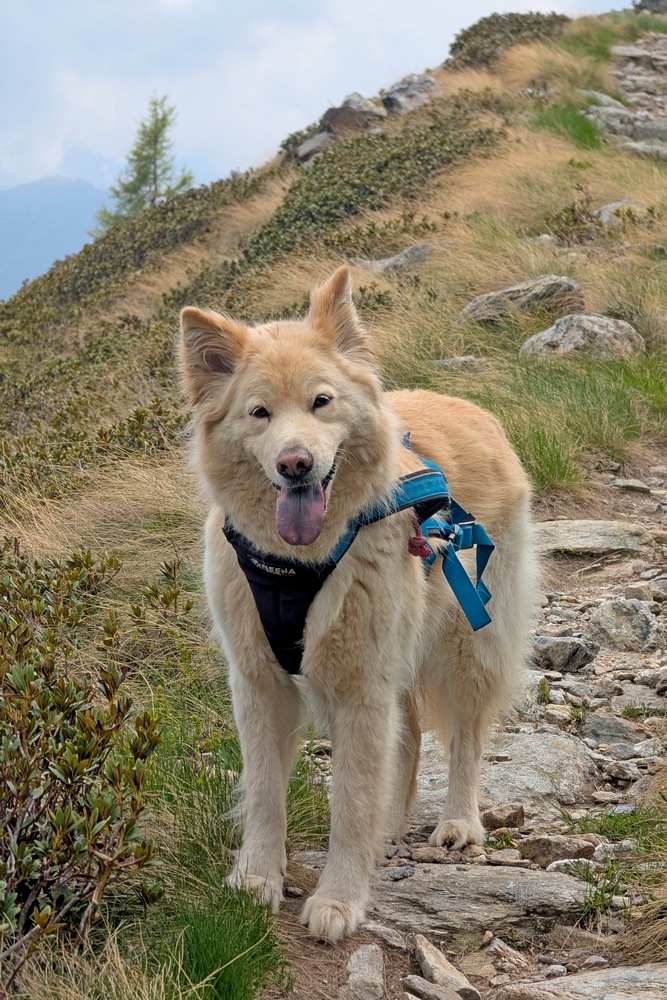
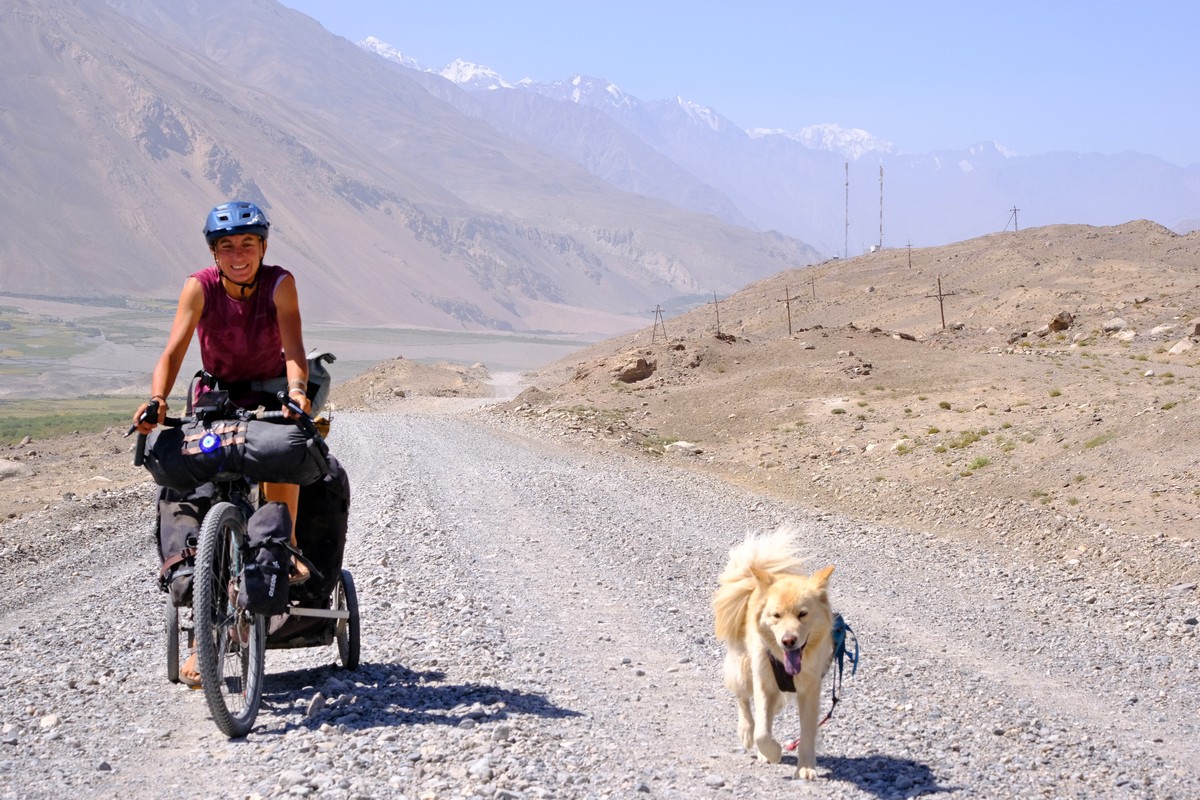
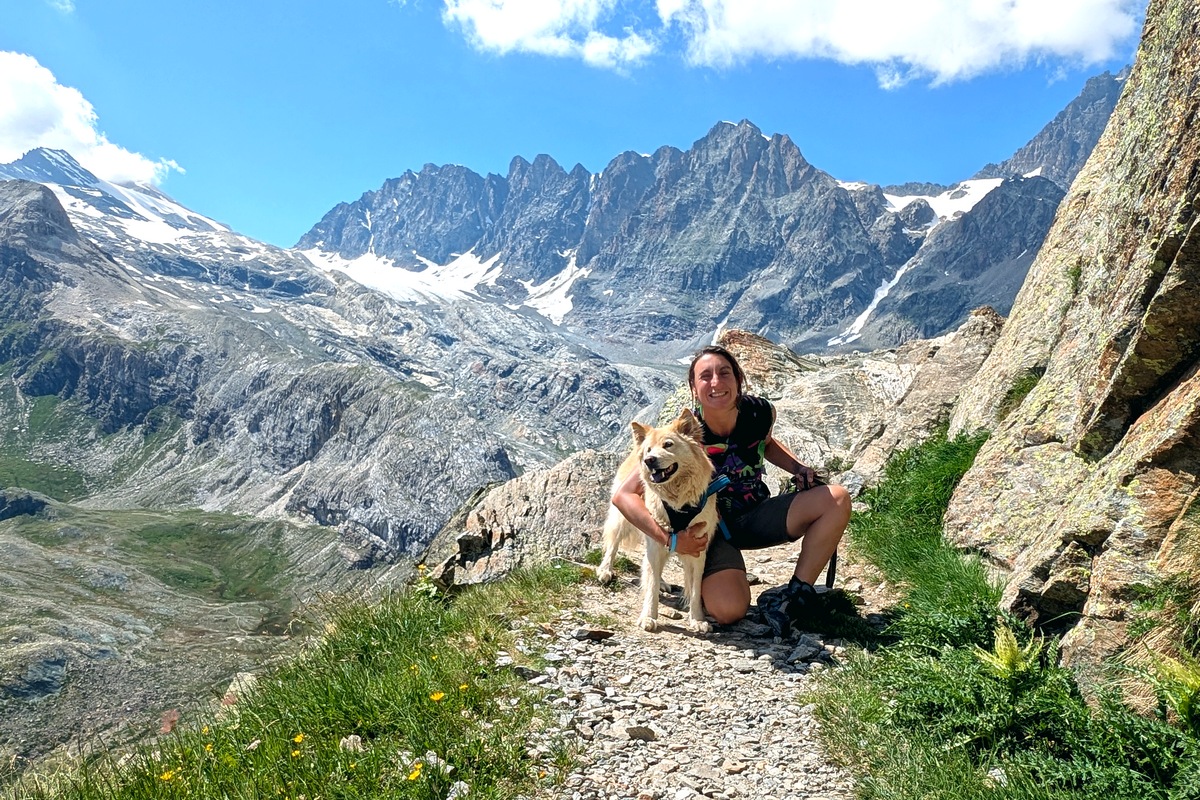
Nala, for example, loves snow, walking, and exploring.
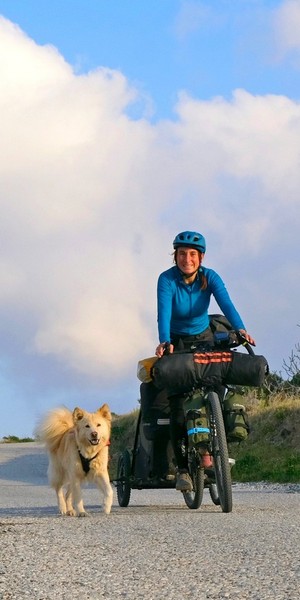
But after several kilometers — especially when she travels in the cart — she becomes restless and starts barking.
She doesn’t like water, and I’ve rarely managed to convince her to jump into a lake — not to mention the sea, which instantly becomes off limits for her once salt water is involved.
Why Hiking with Dogs Changes the Way You Travel
There are many reasons to go hiking with dogs: sharing the beauty of nature and mountains, the scents of forests and alpine meadows, fresh grass under their paws — or, why not, a muddy puddle.
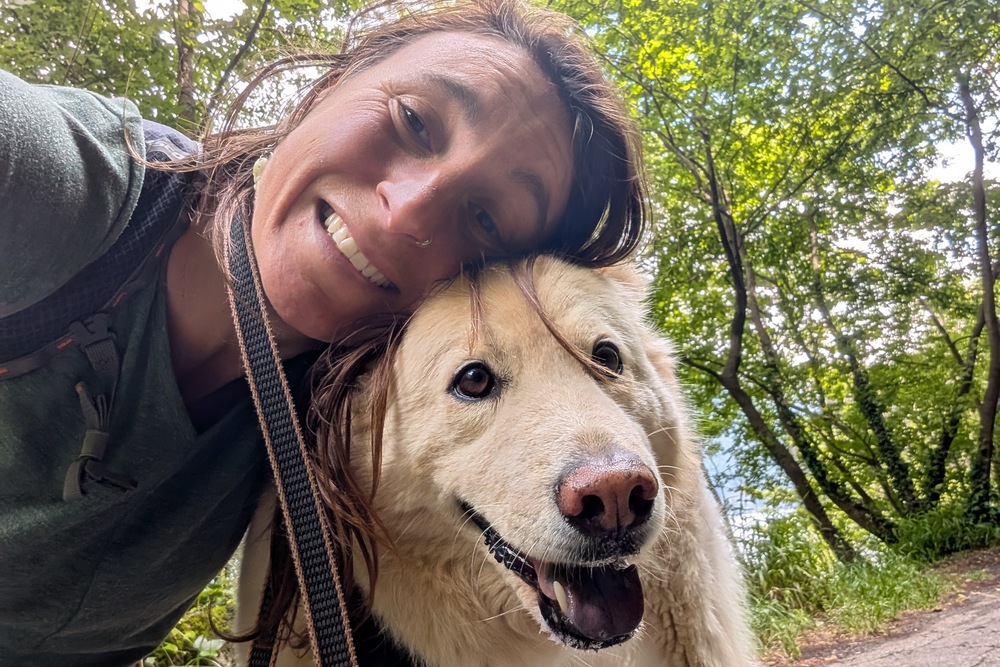
When you hike with your dog, you learn:
-
slowness, slowing down to truly notice what surrounds you;
-
observation, catching subtle movements, like a bird of prey circling above or a squirrel darting through the trees;
-
listening, tuning in to the rustling of leaves, the distant hoot of an owl, the croaking of frogs;
-
connection, recognizing each other’s rhythms and sharing them in a quiet, natural balance.
“Walking with a dog is an act of mutual trust.”
Know Your Dog Before Choosing the Trail
Knowing your dog also means learning to read the signals they send while hiking — especially when fatigue starts to show.
Before heading into higher elevations, it’s essential to understand which trails are suitable for your four-legged companion.
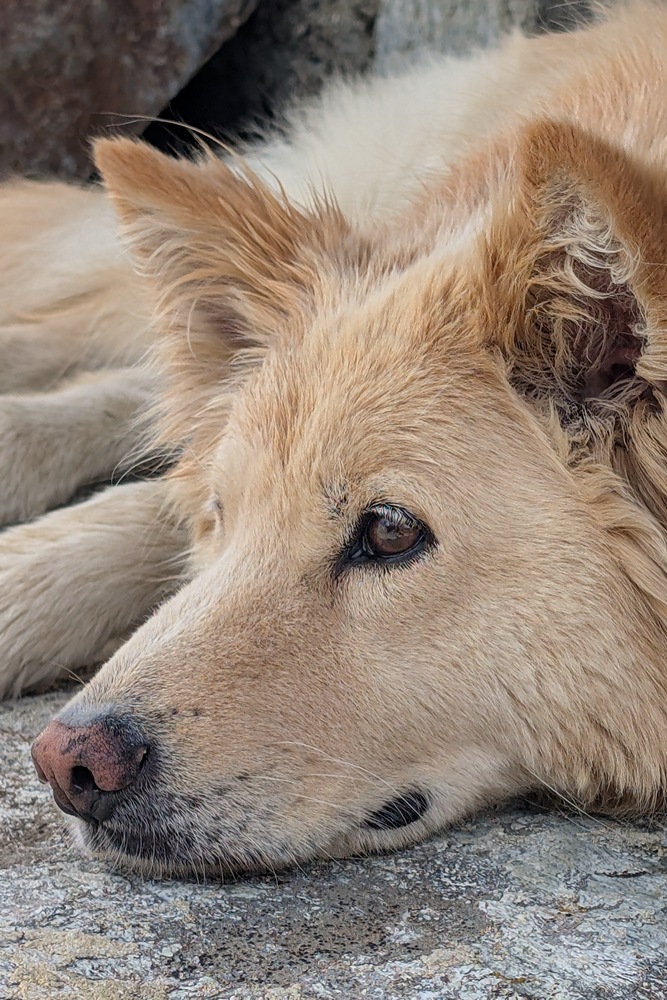
Nala is a medium-sized dog with a build well suited to walking and running, but other dogs may be less inclined — or physically prepared — for long hikes.
Age, Breed, and Personality Matter (But They Don’t Decide Everything)
A dog’s morphology plays a role in their ability to hike, but it’s not the only factor.
Training, age, and personality are just as important when choosing the right activity level.
There’s another key element, though: truly getting to know your dog.
Understanding their needs, recognizing their limits, and respecting them is what allows you to hike together consciously and safely.
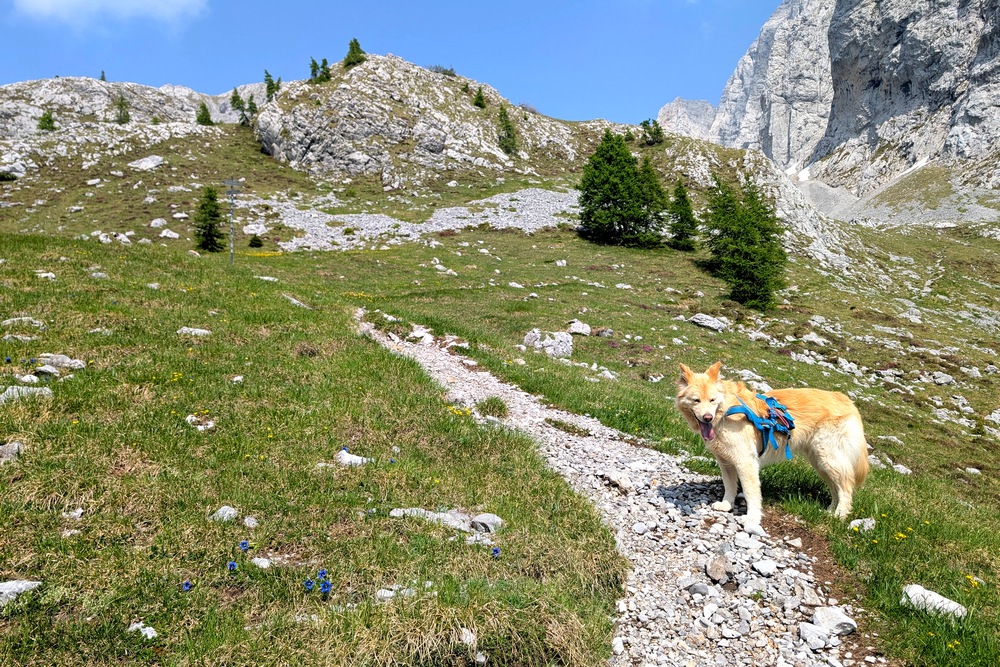
Nala, as active as she is, can still struggle at times — especially in hot weather, during long descents, or after many kilometers.
How do I know when she’s reaching her limit?
Honestly, I don’t always notice right away. But fortunately, Nala is an excellent communicator: she sits down often, lies down, and seeks shade when temperatures become too demanding for her.
Every Dog Has Their Own Pace — and Their Own Trail
Regardless of distance, some hiking routes are objectively unsuitable for dogs.
Via ferratas, scrambling sections, steep ladders, exposed chains, or large rock steps can be dangerous — not only for your dog, but for you as well.
That said, there are many trails of varying difficulty, with different types of terrain that may feel more or less comfortable for your dog.
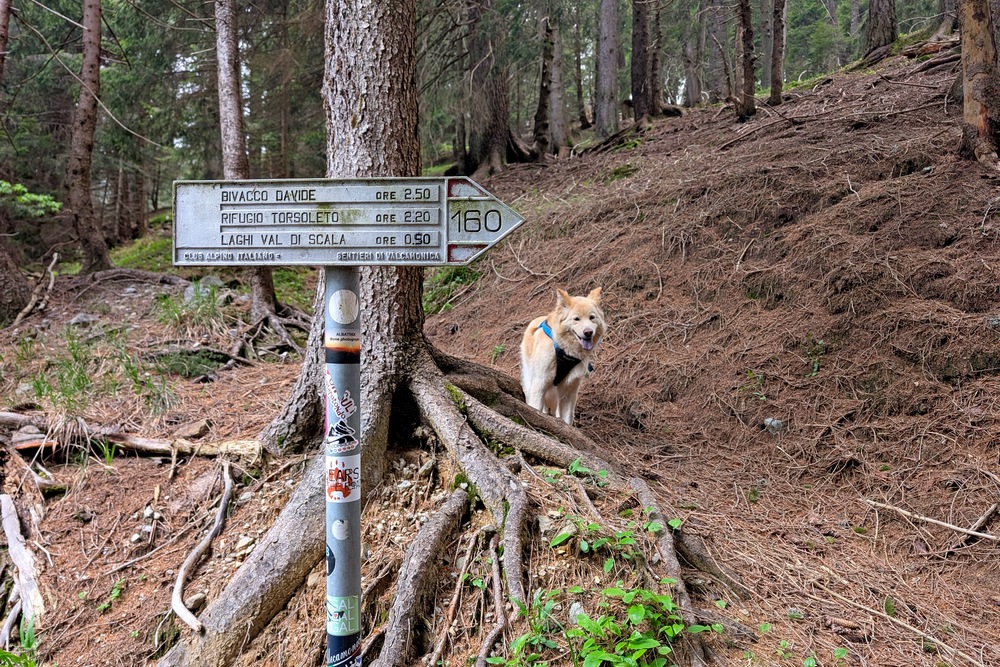
Elevation Gain, Terrain, and Distance
Before going hiking with your dog, we need to do some planning — the least romantic part, but the most important one.
-
Plan the distance carefully, without overdoing it, and include frequent breaks (dogs sleep a lot during a normal day).
-
Objectively evaluate the terrain: gravel, dirt, grass, snow.
-
Don’t underestimate elevation gain — or loss (important for both humans and dogs).
-
Consider sun exposure based on the season, as well as shade and possible shelters.
-
Check for water sources along the trail and plan accordingly — dogs need a lot of water, especially in warm conditions.
- Consider using protective cream on sensitive areas like paws and nose. Nala, for example, has a pink nose that’s very sensitive to sun exposure, so I always protect it with sunscreen and moisturizer.
Better an Easy Trail Than a “Photo Trail”
Want to go hiking with your dog in the mountains?
Start with easy hikes. They’ll help you understand your dog’s true predisposition for hiking and gradually build their endurance for future adventures.
Always remember: your dog’s pace comes before yours.
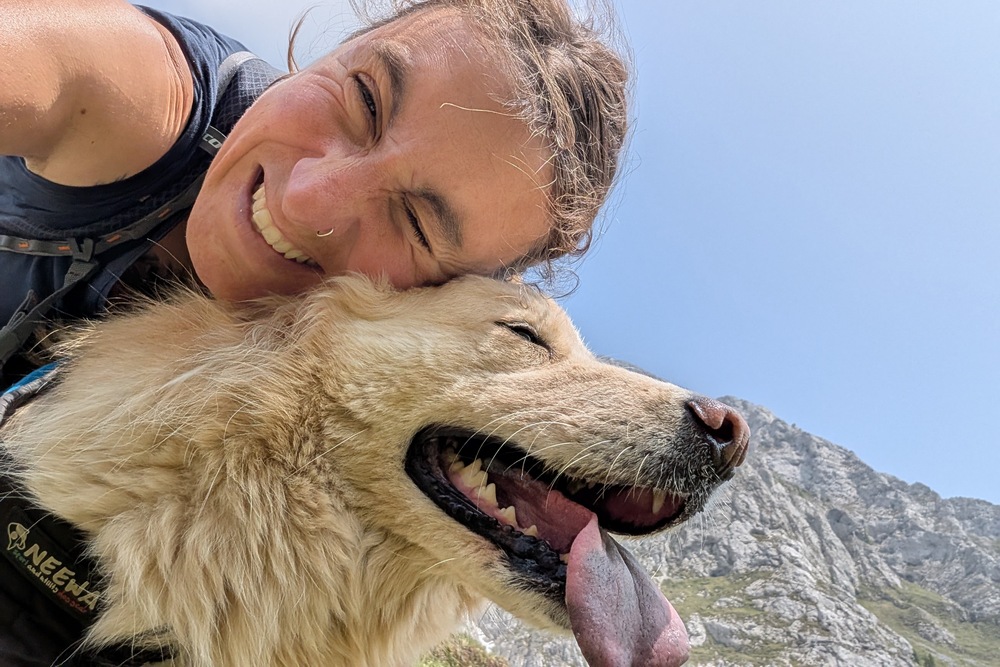
During your first outings together, stop roughly every 30 minutes to observe their physical and mental state, offer fresh water (if none is available naturally), and allow them to recover.
Packing for Hiking with Dogs
Once you’ve chosen your route, it’s time to pack — for your dog too.
First of all, don’t forget flea, tick, and mosquito protection (I personally use Frontline Tri-Act or Advantix, but always consult your veterinarian).
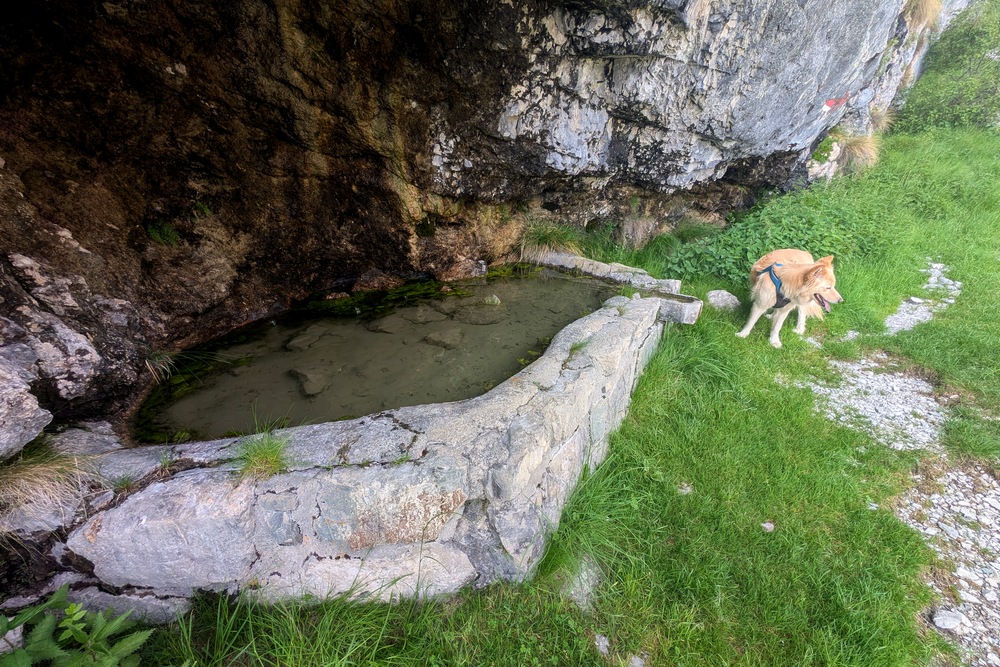
Depending on your itinerary — a day hike or an overnight trip — remember to bring:
-
a collapsible bowl for water and food
-
enough food for the days ahead, plus extra to compensate for higher energy expenditure
-
protective cream for nose and paws
-
a blanket and a toy, to create a familiar sleeping environment
-
a long leash, allowing your dog to walk freely while staying connected to you
-
a muzzle, if required on public transport or in refuges
-
a towel, always useful after rain, mud, or water crossings
-
identification documents, such as a pet passport or health booklet
Sleeping in a Mountain Hut, Bivouac, or Tent
If you plan to spend the night in the mountains with your dog, you’ll need to choose how.
Do you prefer the comfort of a mountain hut — provided it’s along your route and dog-friendly — or a more basic bivouac?
Or maybe you’ll pitch a tent and enjoy sunset and sunrise outdoors, accepting the extra weight on your back.
Mountain Huts
Not all huts in the Alps and Apennines accept dogs overnight. Some lack suitable facilities; others simply choose not to.
Some, like Rifugio Carate on the Valmalenco huts loop, do allow dogs for an extra fee.
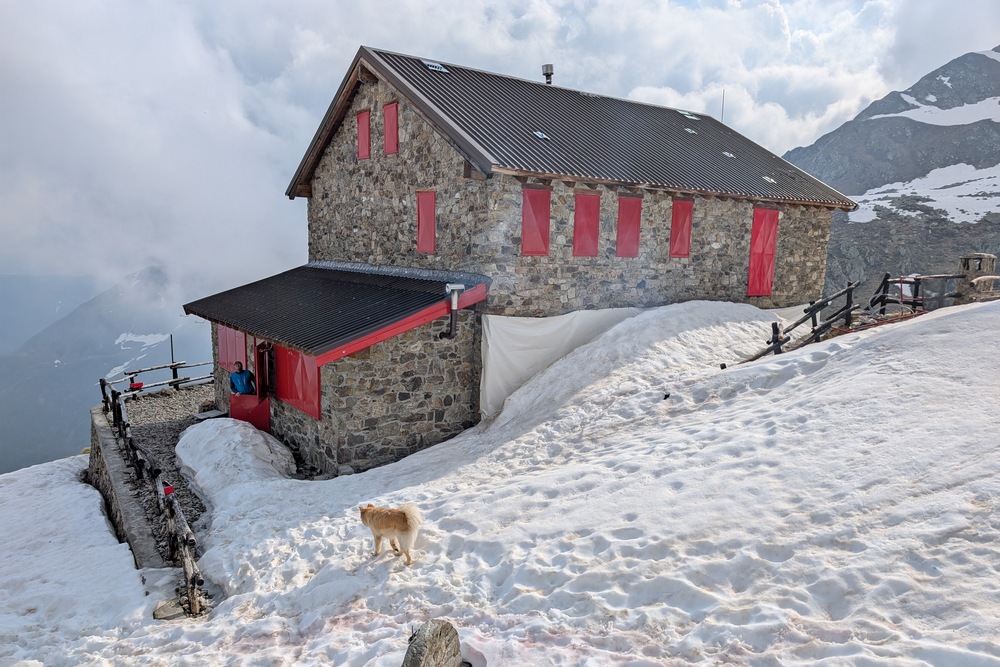
Sometimes dogs are accommodated in boiler rooms, wood sheds, or bivouac areas — it depends on the manager.
Always call ahead to ask and reserve.
Remember that huts are shared spaces: your dog should be calm, quiet, and respectful of other guests.
Bivouac
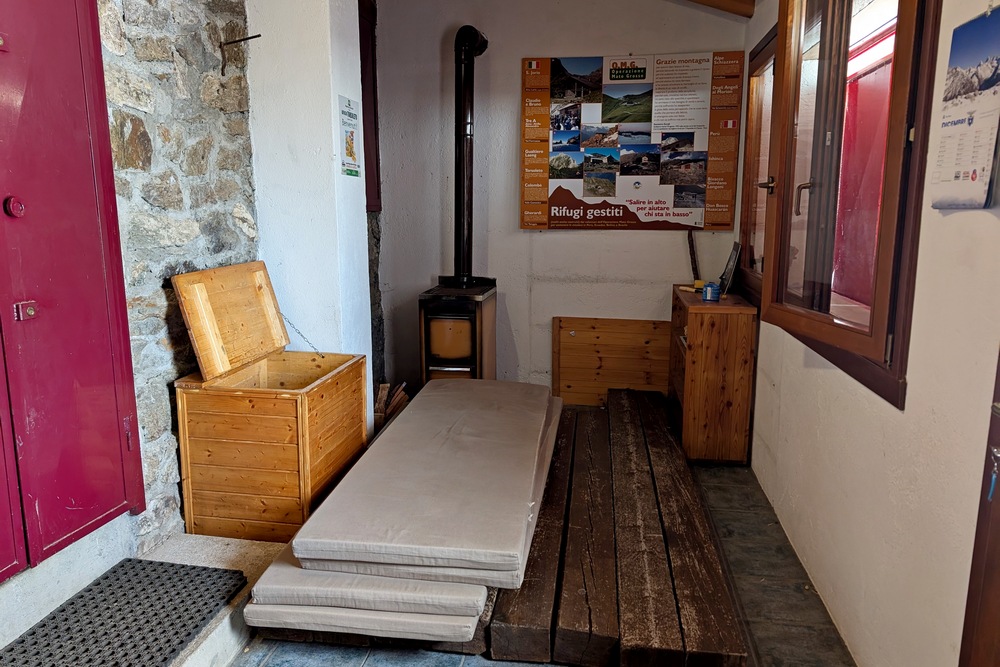
Sleeping in a bivouac with your dog is often easier, as you manage the space yourself.
Still, it’s important to create a safe, comfortable corner where your dog can relax.
Bivouacs can be cold, damp and noisy at night — wind, animals, creaking sounds. Dogs used to outdoor sleeping adapt more easily.
Tent
With a tent, you can sleep almost anywhere — but rules apply.
In Italy, emergency bivouacking from sunset to sunrise is generally allowed, while wild camping is mostly prohibited.
In France, on Alpine routes like the Queyras trek I did with Nala and Simona, wild camping is permitted.
Nala sleeps peacefully in the tent with me, curled up on her blanket.
The key is discretion: arrive late, leave early, and leave no trace.
Encounters with People and Animals
Mountain trails are shared spaces: hikers, families, children, elderly people, other dogs.
That’s why knowing your dog — and anticipating their reactions — is essential.
Is the other dog leashed or free?
Are there children making sudden movements?
Does the area host wildlife that could awaken your dog’s instincts?
Every context is different. Every dog reacts differently.
If you’re unsure how your dog will behave, the rule is simple: long leash, always.
Meeting Other Dogs
Not all dogs enjoy socializing, especially in stimulating environments or while leashed.
Even balanced dogs can behave differently on the trail.
-
Shorten the leash when passing
-
Stay calm and confident
-
Don’t force interactions if either dog shows discomfort
Avoiding an encounter is always better than managing a bad one.
Wildlife Encounters
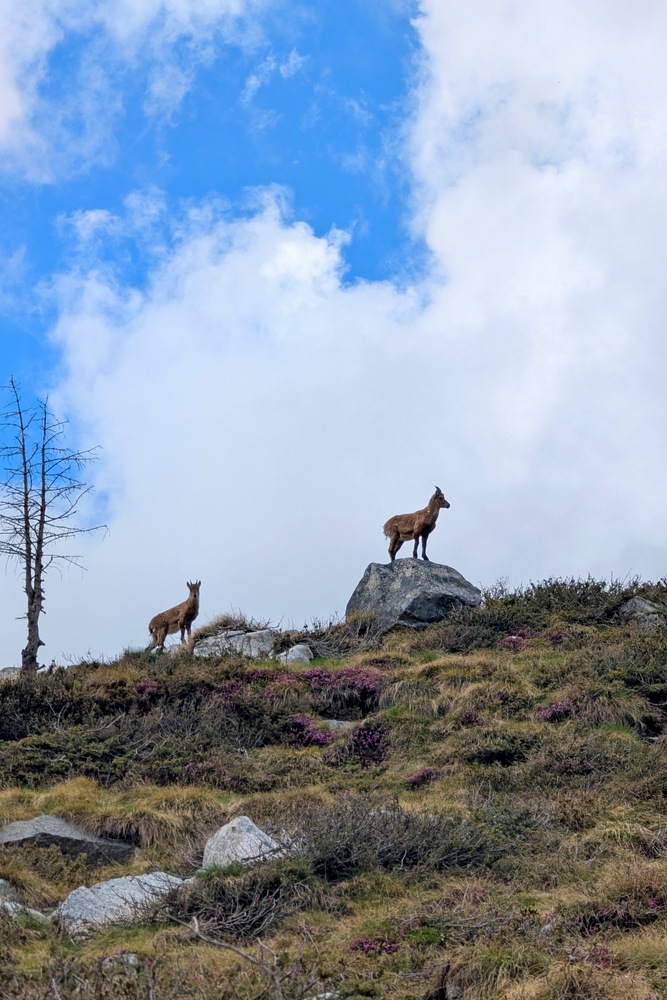
Deer, chamois, marmots, ibex — the mountains are their home.
For a dog, even a calm one, these encounters can trigger deep instincts.
A chase can quickly become dangerous:
-
for wildlife
-
for your dog
-
for you, especially on exposed or unstable terrain
Keeping your dog under control is an act of respect and safety.
The Most Important Thing: Observe Your Dog
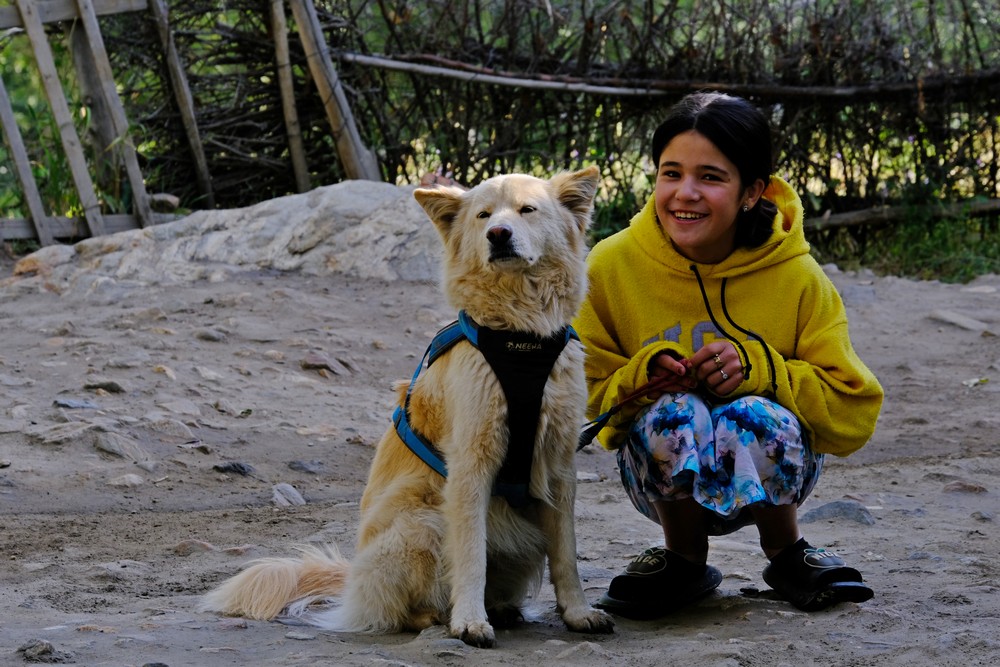
Day after day, hike after hike, you’ll learn what your dog truly enjoys — and what’s better to avoid.
Watch how they walk, where they slow down, when they seek shade or stop.
Listen to the subtle signals: a shorter stride, a sudden pause, a look asking for relief.
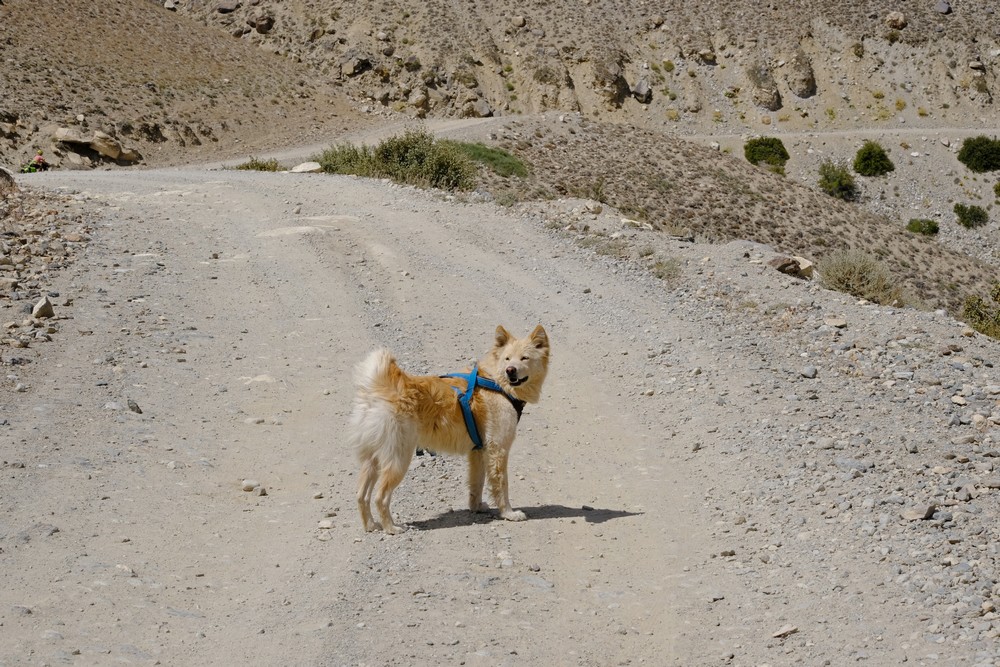
Hiking with your dog isn’t about kilometers — it’s about attention.
The better you learn to read their language, the deeper and more authentic your bond will become.
Because in the end, the right trail is the one you can walk together 🐾