Khiva doesn’t welcome you. It watches you.
Its sand-colored walls preserve centuries of silence, invisible chains, and voices that do not ask to be told — only to be heard.
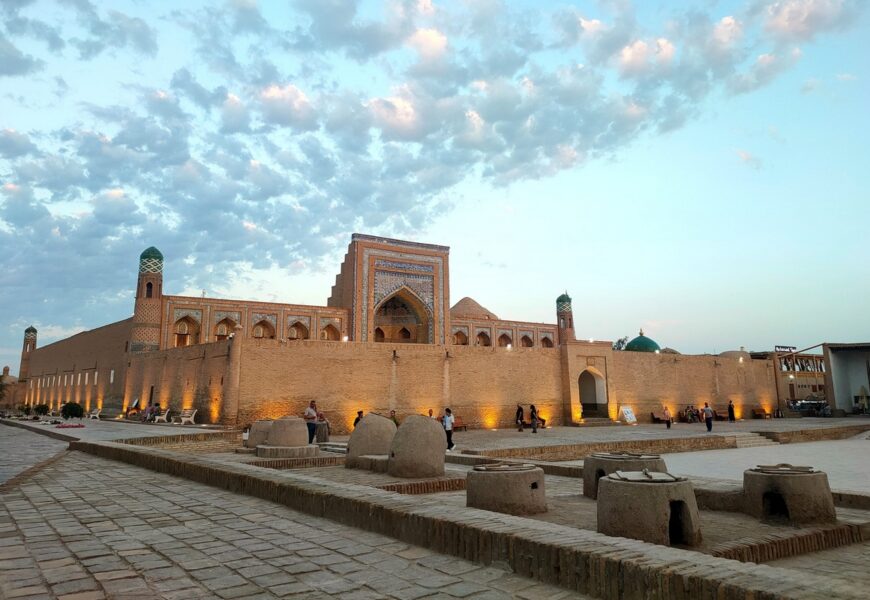
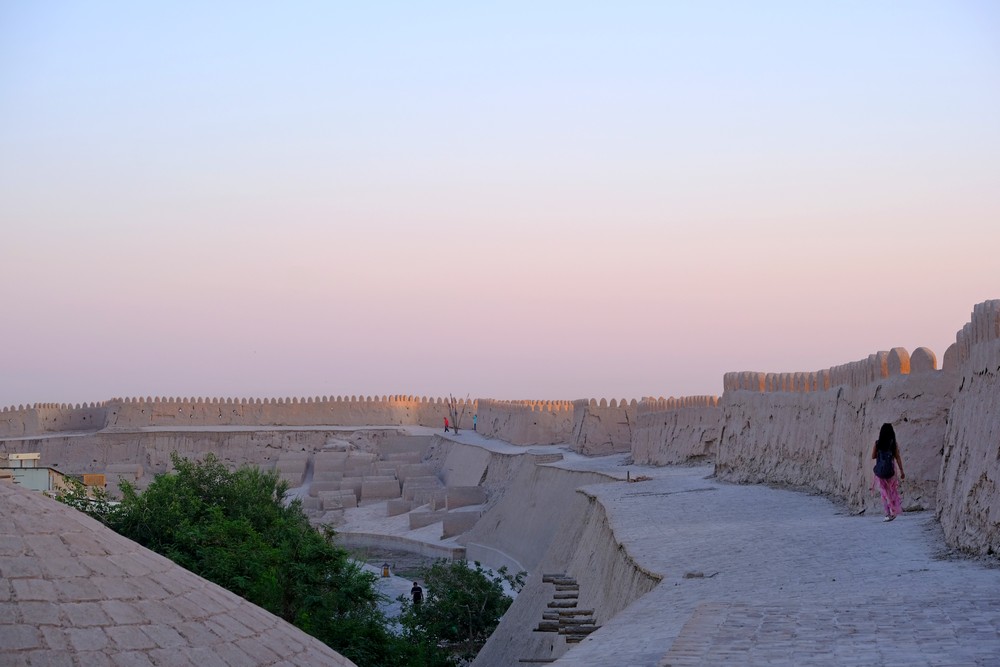
Distant sounds echo through narrow alleys in the summer heat. The air is heavy, and the 2,250-meter-long walls surrounding the city seem to melt in the last light of the day. This is the most evocative moment to observe Khiva from above, to breathe in its scents, to grasp its essence and embrace the shy, restrained life that animates it.
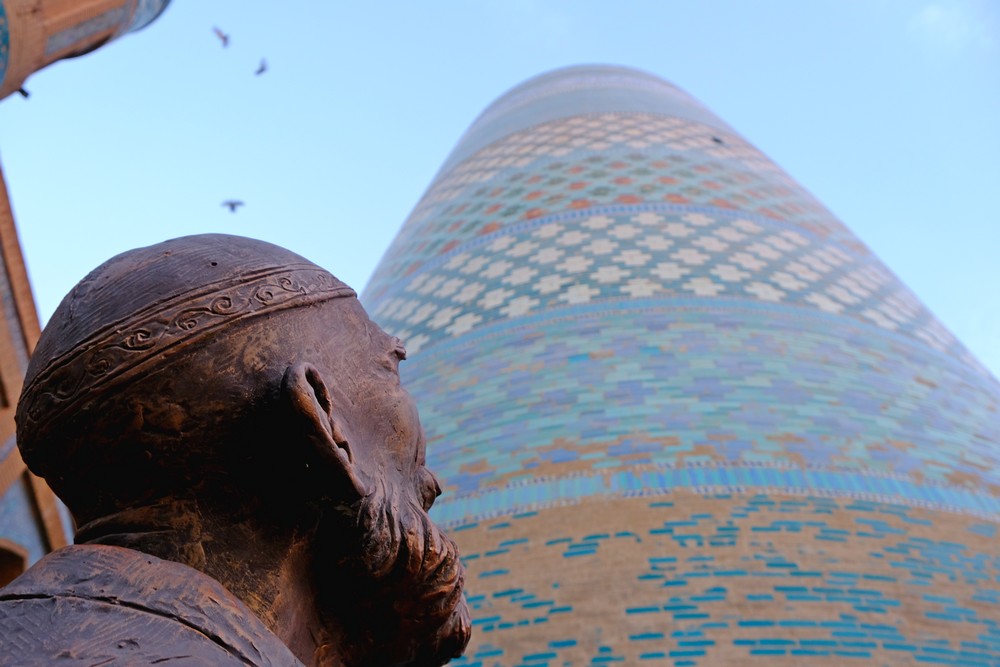
A view from above
In a small courtyard, two children play with an old tire. Their lips curve into smiles, their faces darkened by dust. The intimate, enveloping voice of the muezzin flows across the sky, while women wrapped in colorful veils hurry toward the mosque.

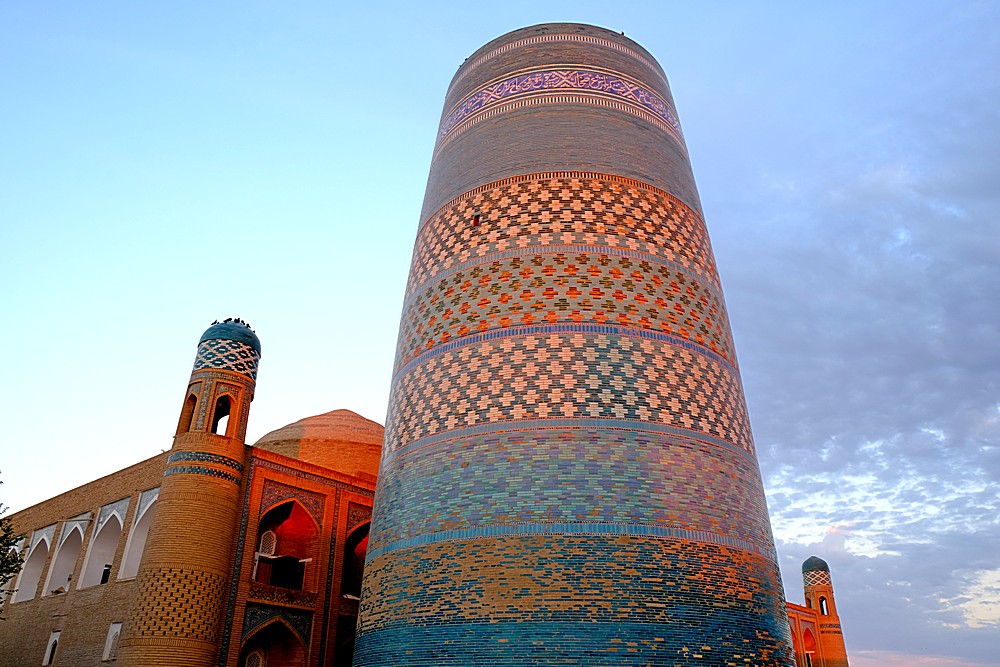
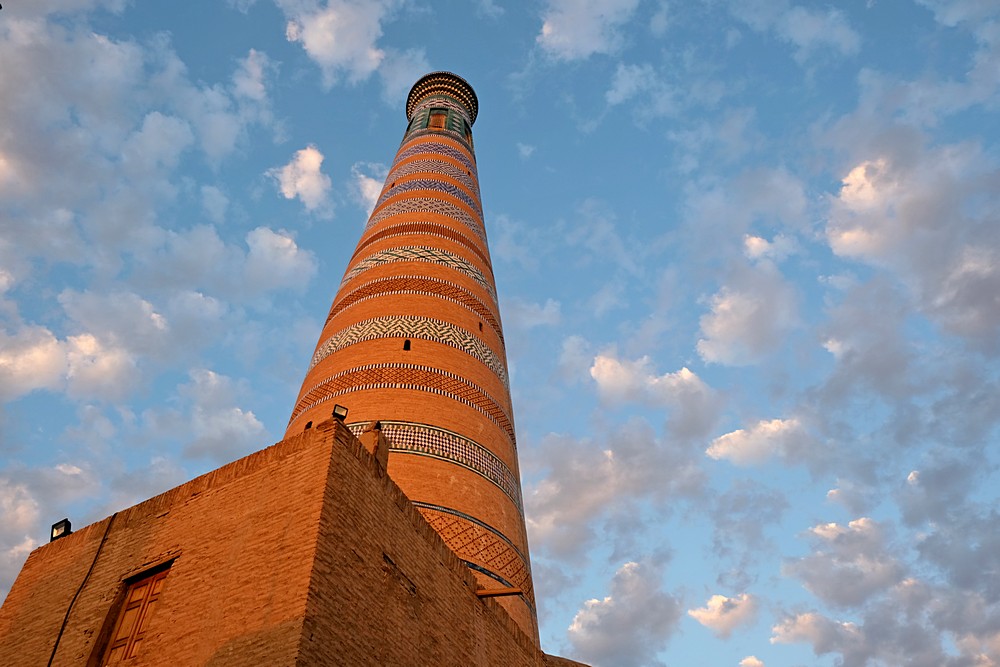
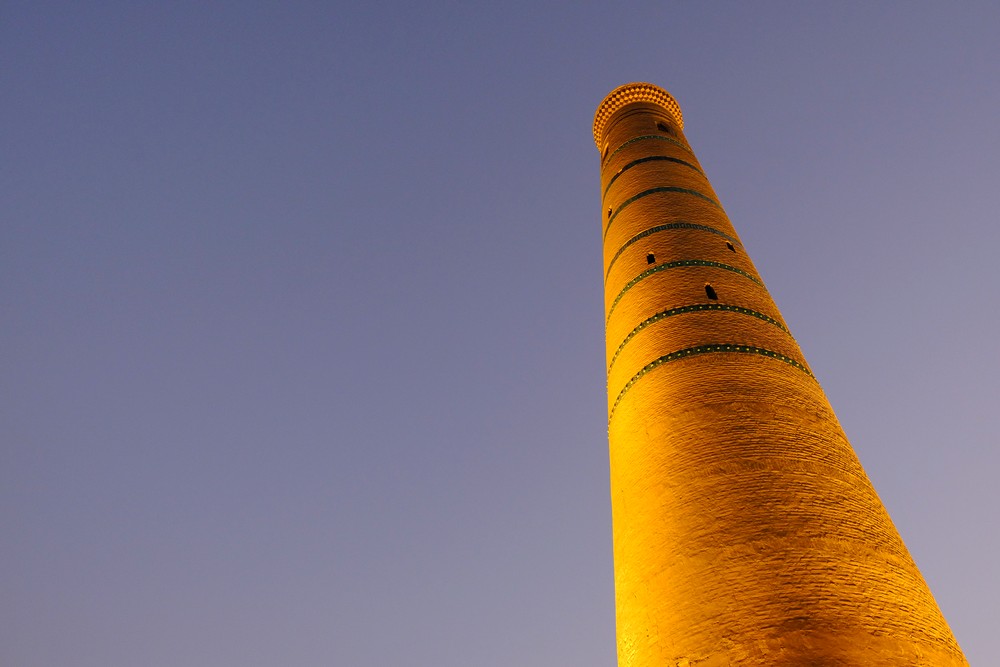
The turquoise tiles of Kalta Minor, the stout, unfinished minaret, glow in the sunlight. The Islam Khodja madrasa, with its soaring minaret — said to be the second tallest in Uzbekistan — stands like a lighthouse for travelers lost in the desert.
Khiva is part of a small oasis nourished by the Amu Darya, one of Central Asia’s great rivers. To the south stretches only desert for hundreds of kilometers: the Karakum, covering nearly 70% of neighboring Turkmenistan. Who knows how many other unusual places lie hidden in those distant lands.
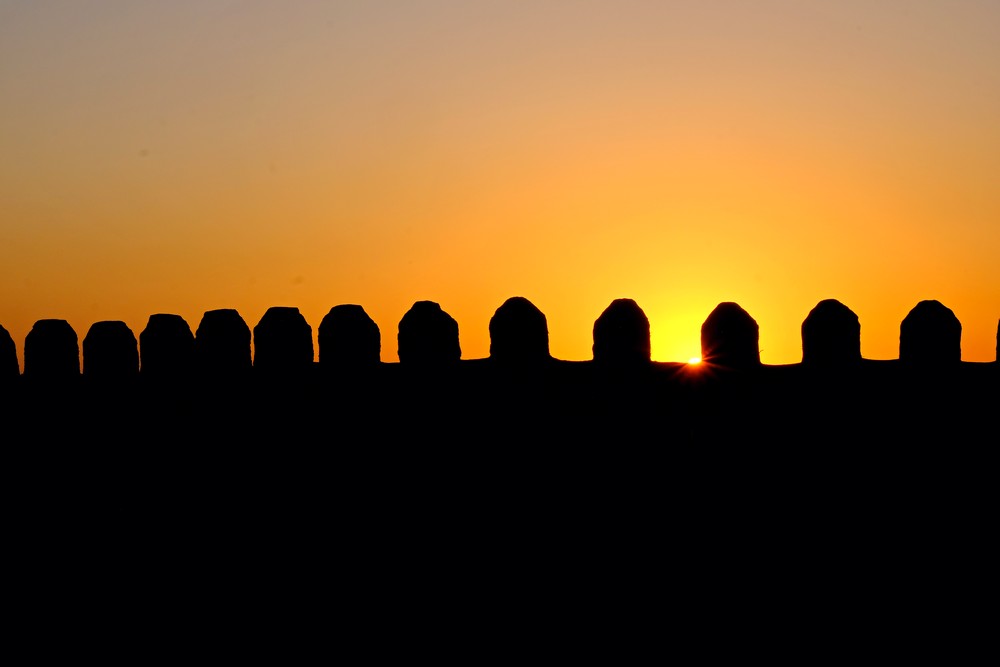
Slaves, concubines and merchants
Khiva rose along a lesser-known branch of the Silk Road, prized for centuries by desert and steppe tribes who supplied the city’s markets with captured men and women. Russians were often valued for domestic labor, while Persian women could become sought-after concubines.
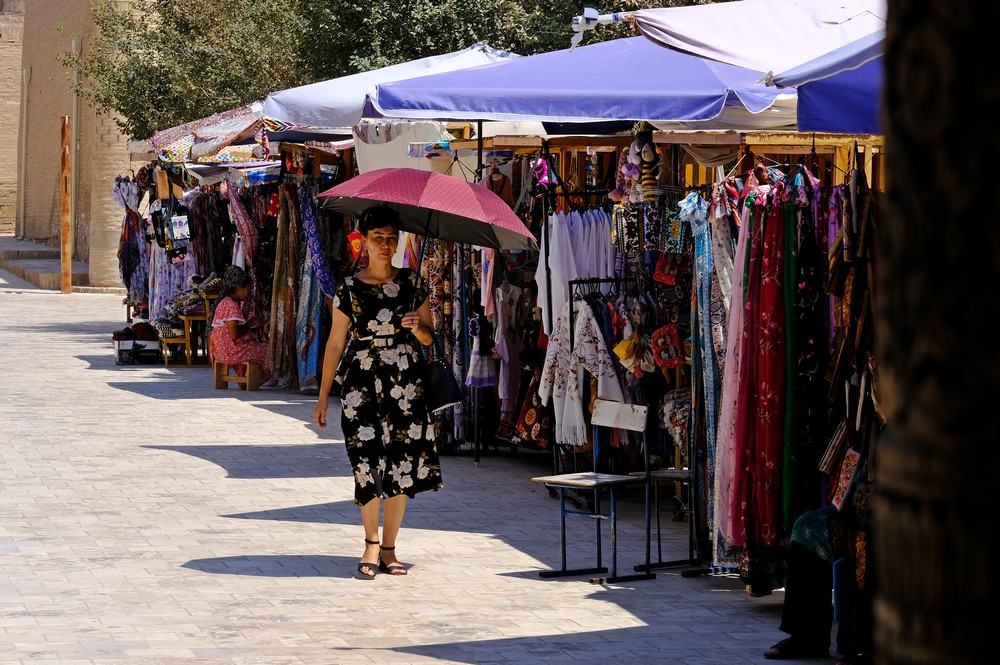
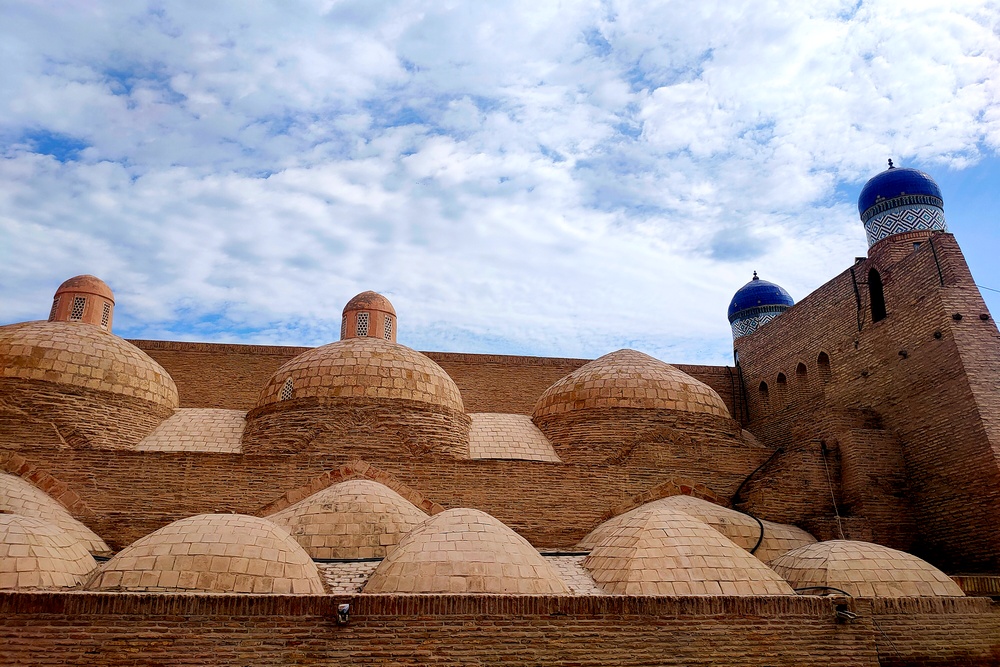
The slave market drew merchants and travelers from afar, creating the need to host people, animals and goods. The Allakulikhan caravanserai still reflects the prosperity of the Khiva Khanate in the 19th century.
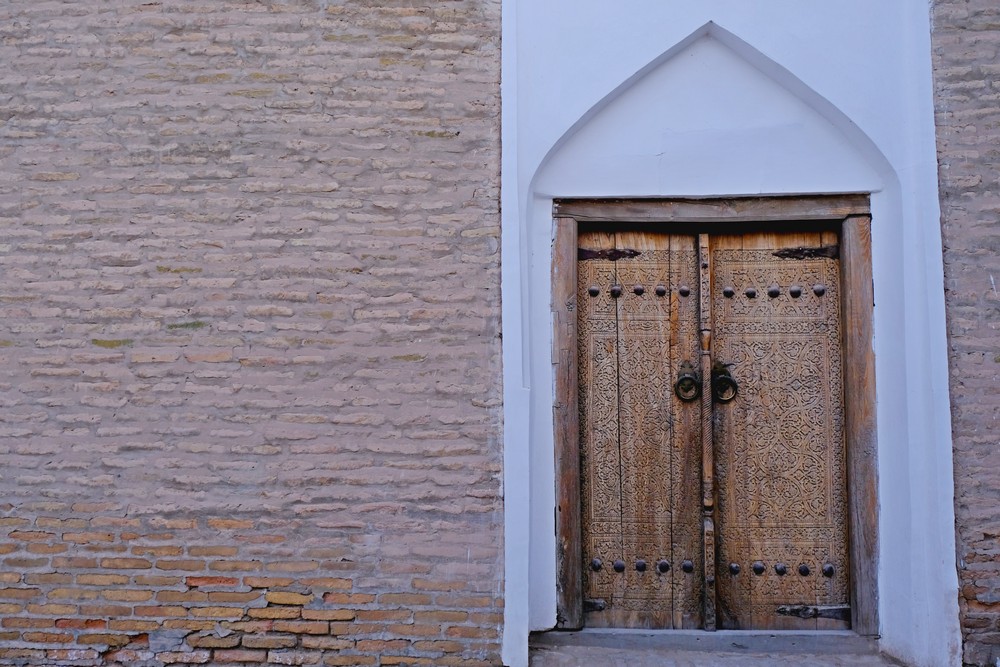
Dawn in Khiva
At dawn, wandering through empty streets with my camera, I pause near the tallest monuments touched by the first warm light. Nearby, a bakery is already awake.
I may be witnessing the ancient bread ritual: every family once had its own oven, baking bread as food and currency. Some loaves were stamped with solar symbols linked to Zoroastrianism — the ancient Persian faith founded by Zarathustra, which also shaped the Bulsara family, ancestors of Freddie Mercury.
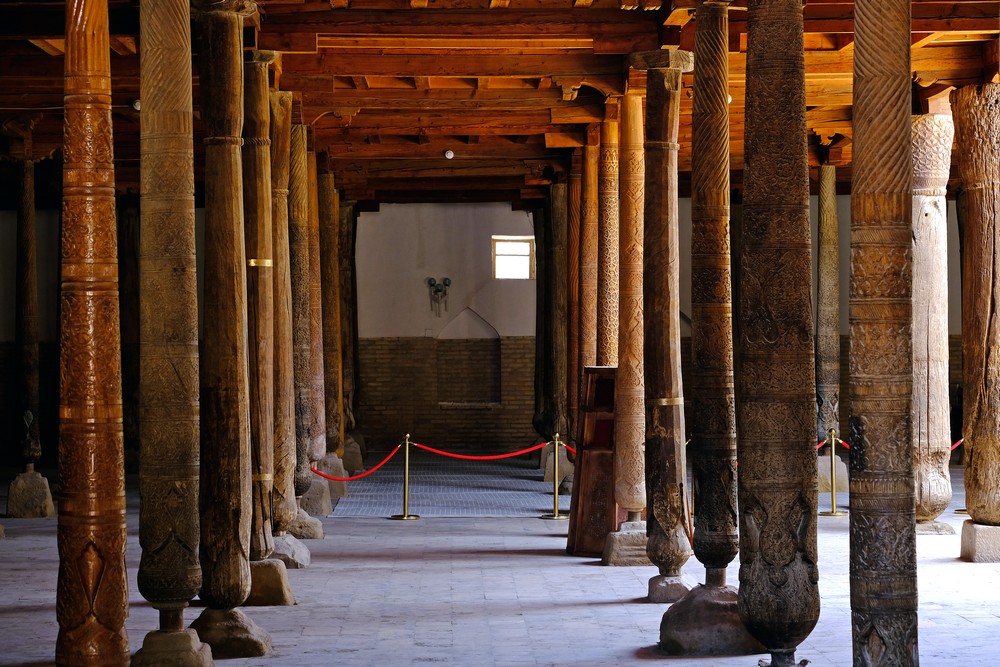
Inside the Juma Mosque, 218 wooden columns stand in silence. I imagine the craftsmen who carved them — exhausted bodies, lively eyes — perhaps knowing their work would live forever.
✨ Khiva at a Glance
Location: Western Uzbekistan, Khorezm region
What it is: An ancient desert oasis city on a Silk Road branch
UNESCO Site: Itchan Kala, the walled inner city
Defining elements: Desert, city walls, silence
Soul: Mercantile, Zoroastrian
🧭 Why Khiva Is an Unusual Place
Khiva is a desert oasis, a timeless place capable of enchanting even the most skeptical travelers.
It feels real and raw: dust and turquoise tiles, a present constantly colliding with a past shaped by slave trade and ancient commerce. Khiva still smells of camels and travelers from distant lands, wrapped in flowing silk garments.
During the scorching summer afternoons, the city seems abandoned to solitude. Then, as night falls, it comes alive again: voices echo through the alleys, blending into a harmonious flow with the ghosts of the past.
🕰️ When to Visit it
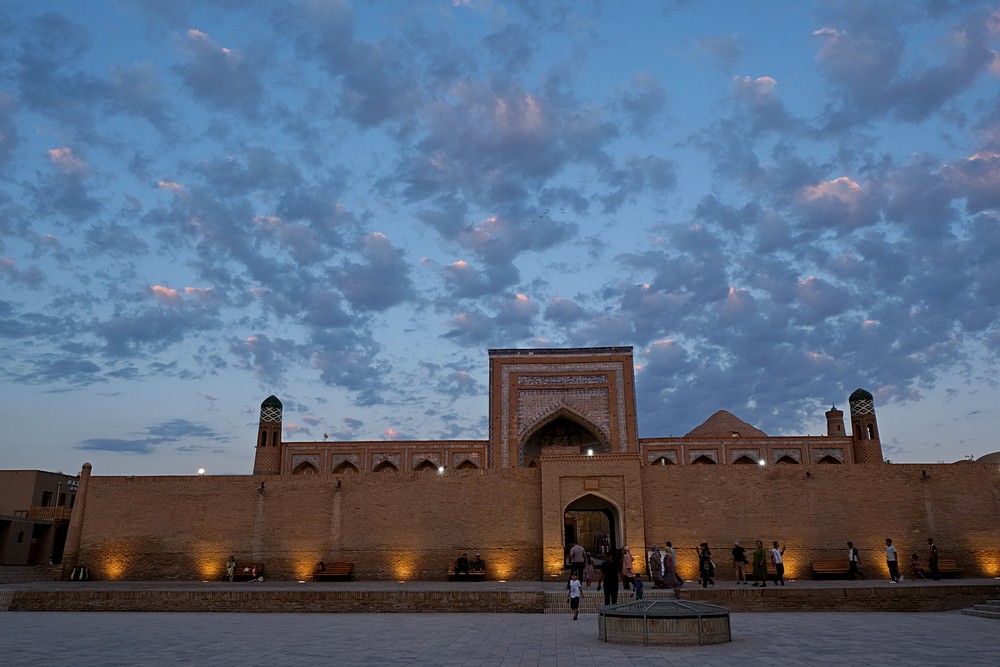
Khiva boils under the midday summer sun, but transforms completely at sunset and in the quiet hours of dawn.
- Spring and autumn are the ideal seasons: temperatures are manageable, days are long, and skies are often clear.
- Summer can be extremely hot, yet it is also when Khiva reveals its most intense atmosphere—especially early in the morning and at sunset, when the light ignites the tiles and the city begins to breathe again. This is also the peak tourist season.
As with many fragile and evocative places, sunrise and sunset are the best times to photograph Khiva and experience it in peace, far from the noise.
Khiva reveals itself best when the crowds are asleep.
🚲 Cycling to Khiva
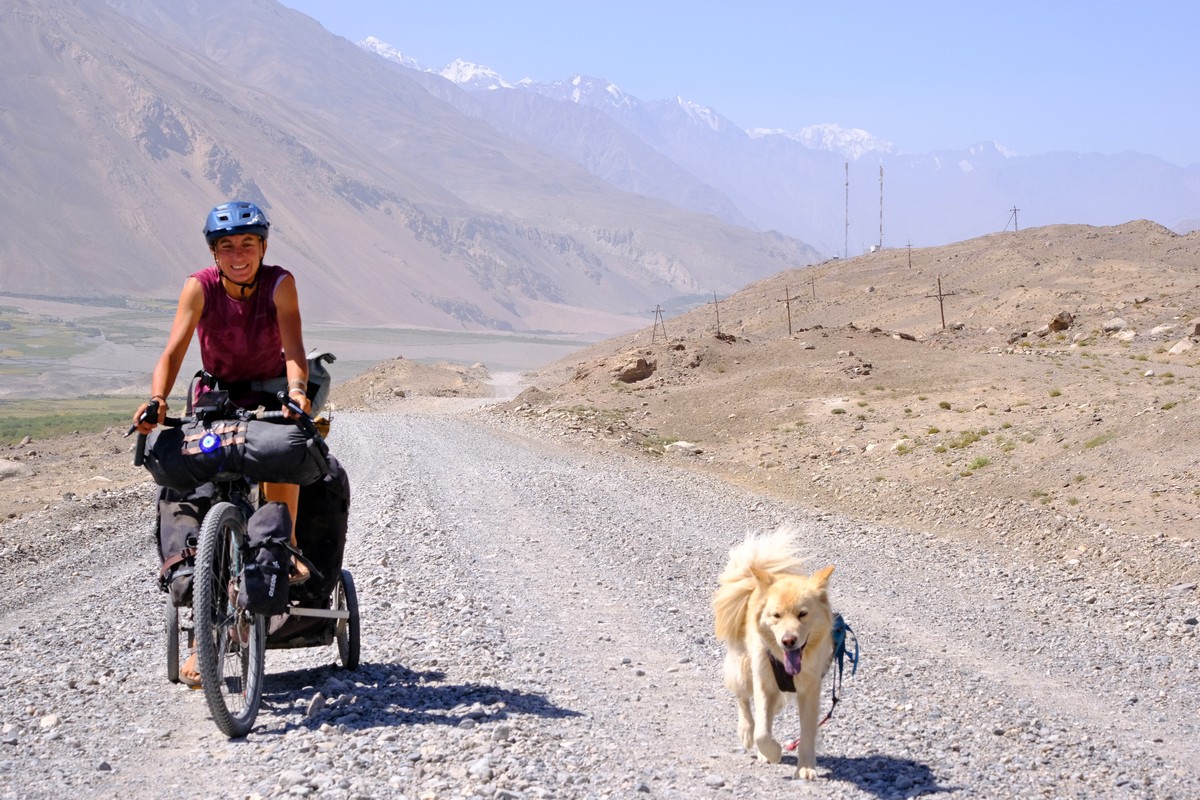
Khiva can be easily reached by bicycle from Urgench, about 35 km away. The route is flat and straightforward, with no technical difficulties, but the environment can be extreme.
In summer, heat becomes the main challenge. Temperatures often exceed 45–47°C (113–117°F), and cycling after 10 a.m. can be dangerous. If you travel during the hottest months, start before sunrise or ride in the late afternoon, when the desert briefly eases its grip.
Do not forget:
-
Carry plenty of water—more than you think you need
-
High-protection sunscreen and a hat
-
Lightweight but covering clothing
-
Avoid riding during the hottest hours, especially from June to August
Spring and autumn are the best seasons to cycle to Khiva: temperatures are more manageable, and the journey itself becomes part of the experience—passing through villages, cultivated fields, and slowly approaching the sand-colored walls and turquoise minarets.
Arriving in Khiva by bike means feeling the desert draw closer kilometer after kilometer, surrendering to its powerful pull with no way to resist.
👉 What Stays With You
Unusual places rich in atmosphere, like Khiva, have the power to seep into your spirit with an aura of magic.
Khiva gets under your skin—it unsettles you, confuses you, enchants you, and changes you.
It is a place where you can truly sense the depth of the human soul, but also one where you can completely lose your head.
Khiva is not simply visited: it is crossed—and something of it stays with you, long after you leave.
📍 Place Info
Country: Uzbekistan
Region: Khorezm
Type: Desert oasis city
UNESCO Site: Itchan Kala
How to get there: From Urgench (35 km)
Recommended stay: 2–3 days
Cycling-friendly: Yes, beware of extreme heat
Best time to visit: Spring and autumn
Crowd levels: High in summer
Best for: Slow travelers, history lovers, experienced cycle travelers